

Asthma in Adults: Recognizing Symptoms, Managing Triggers, and Preventing Attacks
Asthma affects approximately 25 million Americans and can develop for the first time in adulthood, often triggered by occupational exposures, hormonal changes, or a respiratory illness that sensitizes the airways. Recognizing triggers is key to control.
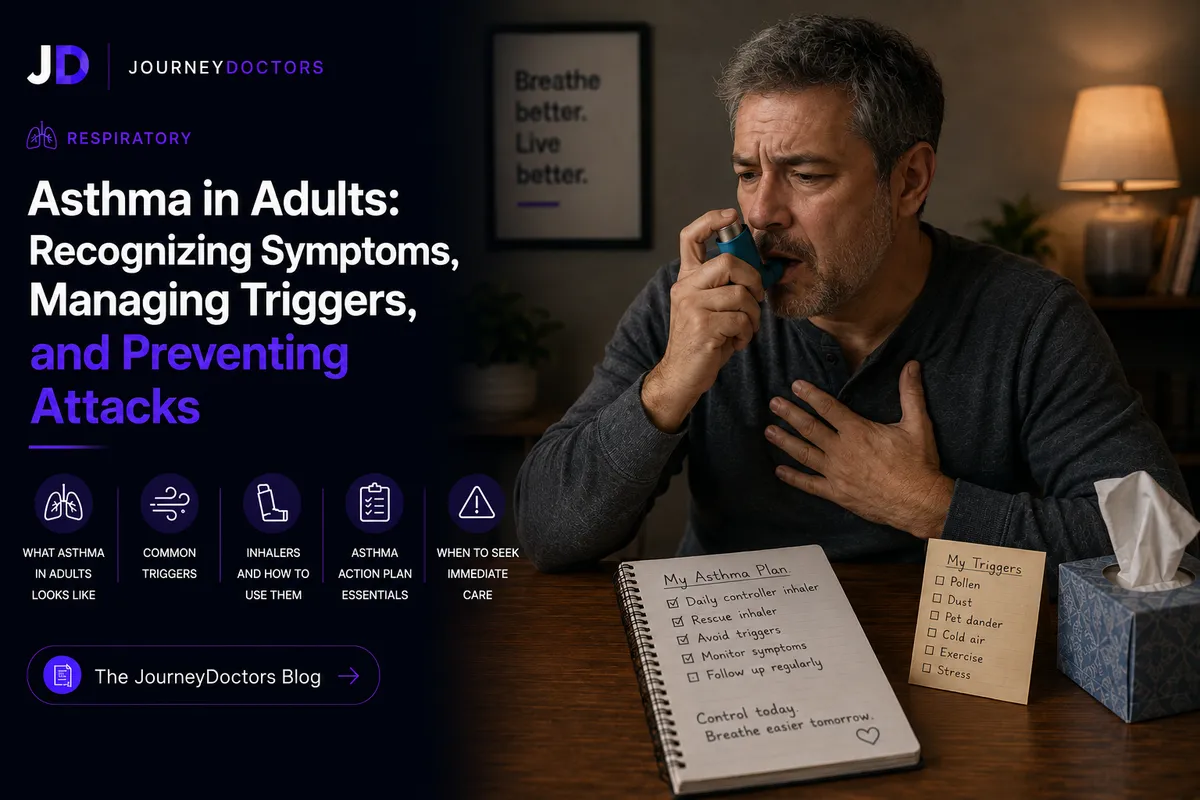
Asthma is a chronic inflammatory airway disease characterized by variable and reversible airflow obstruction, airway hyperresponsiveness, and underlying airway inflammation. Approximately 25 million Americans have asthma — about 8% of the population — and a significant proportion develop it for the first time as adults, not in childhood. Adult-onset asthma can be triggered by occupational chemical exposures, hormonal transitions including pregnancy and menopause, obesity, aspirin or NSAID sensitivity, and respiratory infections that sensitize already-reactive airways. The cardinal symptoms are wheezing, cough (often worse at night or early morning), shortness of breath, and chest tightness — but not every patient presents with all four, and the absence of wheezing does not rule out asthma.
Asthma in Adults vs. Childhood: Key Differences
Childhood asthma and adult asthma share the same underlying biology but differ in important clinical ways. Childhood asthma is more commonly atopic — driven by allergic sensitization (to dust mites, pet dander, pollen) with elevated IgE and eosinophilic inflammation. Boys are disproportionately affected in childhood. Adult-onset asthma is more likely to be non-atopic (not allergy-driven), often triggered by occupational exposures, obesity, or aspirin/NSAID intolerance. Women develop new-onset asthma more often than men in adulthood, particularly in the peri-menopausal period. Adult-onset asthma also tends to be more persistent (less likely to go into remission) and can be more severe on average than childhood asthma.
Of adults who had childhood asthma, roughly 40–70% experience remission by adulthood. However, remission is often incomplete at a physiological level, and asthma frequently recurs in the thirties, forties, or fifties — sometimes after decades of apparent resolution.
How Asthma Feels: Symptom Patterns That Should Prompt Evaluation
Asthma symptoms characteristically:
- Worsen at night and early morning (when airway tone is physiologically lowest)
- Vary day to day and are linked to identifiable triggers
- Respond to bronchodilators (symptom relief with a rescue inhaler is both a treatment effect and a diagnostic clue)
- Occur in episodic attacks rather than constant baseline symptoms in many patients
The classic symptom triad is wheeze (a high-pitched whistling sound during exhalation), chest tightness (often described as a band around the chest or difficulty taking a full breath), and dyspnea (shortness of breath). Cough-variant asthma — in which chronic cough is the dominant or sole symptom with minimal or absent wheeze — is frequently underdiagnosed and should be considered in any patient with a persistent cough that is worse at night, worsened by cold air or exercise, and not explained by post-nasal drip or GERD (though both can coexist with asthma).
In a severe attack: the patient may be unable to speak in full sentences, accessory muscles of respiration (neck and shoulder muscles) may be visibly working, and oxygen saturation may fall. A "silent chest" — no wheeze detectable on exam — during a severe episode is not reassuring; it may indicate such severe obstruction that airflow is inadequate to generate the wheeze. This is a medical emergency.
Common Asthma Triggers
JourneyDoctors
Not sure if this applies to you?
Describe your symptoms to Dr. Maya — our AI GP — and get a real clinical response in under a minute. Free to start.
Talk to Dr. MayaAllergens
In atopic asthma: house dust mites, pet dander (cat allergen in particular is highly potent and pervasively spread), cockroach allergen (a major driver of asthma morbidity in urban environments), mold spores, and pollen are the primary allergens. Identifying specific sensitivities through allergy skin testing or specific IgE blood tests and reducing exposure — HEPA air filtration, allergen-proof mattress and pillow covers, removing carpet in bedrooms — is a high-yield intervention for allergic asthma.
Exercise
Exercise-induced bronchoconstriction (EIB) affects 40–90% of people with asthma and is a major limiter of physical activity and quality of life. It typically begins 5–10 minutes into vigorous exercise and peaks 5–10 minutes after stopping. Warmup before exercise, pre-treatment with a short-acting beta-agonist (albuterol) 15 minutes before exercise, and use of a long-acting bronchodilator are standard management approaches. Exercise-induced symptoms should not be accepted as inevitable — they are a signal of suboptimal asthma control.
NSAIDs and Aspirin
Aspirin-exacerbated respiratory disease (AERD, also called Samter's triad) affects approximately 10–15% of adults with asthma and is characterized by asthma, chronic rhinosinusitis with nasal polyps, and sensitivity to aspirin and other COX-1 inhibiting NSAIDs. Ingestion of aspirin or ibuprofen in these patients can trigger severe bronchospasm, rhinorrhea, and systemic symptoms within 30–120 minutes. Acetaminophen (Tylenol) is generally safe in AERD at standard doses and is the preferred analgesic. AERD is often underdiagnosed and should be suspected in any adult with severe or hard-to-control asthma and nasal polyps.
Occupational Exposures
Occupational asthma accounts for approximately 15% of adult-onset asthma. Hundreds of workplace substances have been implicated: isocyanates (in spray painting, polyurethane manufacturing), flour and grain dust (bakers, farmers), latex, wood dusts, cleaning products, hairdressing chemicals, and laboratory animal allergens are among the most common. A key diagnostic clue is improvement of symptoms on weekends and holidays and worsening on workdays. Early removal from exposure after diagnosis significantly improves long-term outcomes; prolonged continued exposure after diagnosis leads to fixed, permanent airway damage.
Respiratory Infections
Viral upper respiratory infections — particularly rhinovirus, influenza, and RSV — are the most common trigger for asthma exacerbations in both children and adults. Annual influenza vaccination and updated COVID-19 vaccination are strongly recommended in all patients with asthma. Respiratory syncytial virus (RSV) in adults has been increasingly recognized as a significant asthma trigger, and RSV vaccines for adults 60 and over are now available.
Indoor Air Quality and Smoke
Cigarette smoke, secondhand smoke, wood-burning fires, and gas stoves all generate airway irritants that worsen asthma. Smoking cessation is one of the highest-impact interventions available to a smoker with asthma. Gas stoves produce nitrogen dioxide and particulate matter indoors; switching to induction cooking or improving kitchen ventilation can meaningfully reduce indoor pollutant exposure.
Peak Flow Meters: Objective Home Monitoring
A peak flow meter is a simple hand-held device that measures peak expiratory flow rate (PEFR) in liters per minute — the maximum speed of air expelled from the lungs. Regular peak flow monitoring provides an objective measure of airway function that catches deteriorating control before symptoms become severe. Individual peak flow measurements are interpreted relative to the patient's personal best:
- Green zone (80–100% of personal best): Asthma well controlled. Continue usual medications.
- Yellow zone (50–79%): Caution. Airway function dropping. Start reliever inhaler, consider oral steroids per asthma action plan.
- Red zone (below 50%): Emergency. Start rescue medications immediately and seek medical care.
Rescue vs. Controller Inhalers: Understanding Your Medications
Short-Acting Beta-Agonists (SABAs) — Rescue Inhalers
Albuterol (ProAir, Ventolin, Proventil) is the most commonly prescribed rescue inhaler. It works within 5 minutes by relaxing bronchial smooth muscle, and effects last 4–6 hours. SABAs should be used for acute symptoms and before unavoidable trigger exposures. Needing a rescue inhaler more than twice a week (excluding pre-exercise) is a signal that asthma is not adequately controlled and that controller therapy needs to be reviewed or escalated.
Inhaled Corticosteroids (ICS) — The Foundation of Controller Therapy
Inhaled corticosteroids — fluticasone (Flovent), budesonide (Pulmicort), beclomethasone (QVAR), ciclesonide (Alvesco), and others — are the most effective controller medications for persistent asthma. They reduce airway inflammation, decrease hyperresponsiveness, and reduce the frequency and severity of exacerbations. They are administered daily, and their benefit is preventive, not immediately felt. Many patients stop ICS when they feel better — this is one of the most common management errors. Rinse your mouth after every ICS dose to prevent oral candidiasis.
Long-Acting Beta-Agonists (LABAs) and Combination Inhalers
Formoterol and salmeterol are LABAs that provide 12 hours of bronchodilation and are always used in combination with an ICS (never as monotherapy in asthma — LABA monotherapy without ICS is associated with increased risk of asthma-related death). Combination inhalers such as fluticasone/salmeterol (Advair), budesonide/formoterol (Symbicort), and fluticasone/vilanterol (Breo) simplify regimens and improve adherence. A particularly important advance: budesonide/formoterol (Symbicort) is now recommended as an "as-needed" reliever at mild to moderate stages, replacing albuterol-only approaches — the GINA 2024 guidelines support this track.
Biologic Therapies for Severe Asthma
For patients with severe asthma not controlled on high-dose ICS/LABA, targeted biologic therapies based on the inflammatory phenotype offer significant benefit. Dupilumab (Dupixent) blocks IL-4 and IL-13 and is effective across eosinophilic and type 2 asthma. Mepolizumab (Nucala) and benralizumab (Fasenra) target IL-5/the IL-5 receptor in eosinophilic asthma. Omalizumab (Xolair) targets IgE and is effective in allergic asthma. These agents have transformed the management of severe asthma, reducing exacerbation rates by 50% or more and enabling steroid reduction.
The Asthma Action Plan
An asthma action plan is a written, personalized document developed with your physician that tells you exactly what to do based on symptoms and/or peak flow values — which medications to take and at what doses in the green, yellow, and red zones, and when to call for help. Action plans reduce emergency visits and hospitalizations. If you have asthma and do not have a written action plan, ask your physician for one at your next visit.
Signs of Poorly Controlled Asthma
Asthma is poorly controlled when: you use a rescue inhaler more than twice a week for symptoms, you wake from sleep with asthma symptoms more than twice a month, your activities are limited by asthma, you have had any asthma exacerbations requiring oral steroids, an ER visit, or hospitalization in the past year, or your lung function (FEV1 on spirometry) is below 80% of predicted. Poorly controlled asthma is not just inconvenient — it is associated with progressive decline in lung function over years. Achieving and maintaining control is a genuine clinical goal, not an aspirational one.
When to See a Doctor
See a physician if you experience recurrent wheezing, chronic cough (especially nocturnal), chest tightness, or breathlessness with exertion that is unexplained by another diagnosis. Spirometry — a lung function test — is required for formal asthma diagnosis and cannot be replaced by a symptom questionnaire alone. If you have diagnosed asthma and are using your rescue inhaler more than twice a week, have woken with symptoms at night, or have missed activities because of asthma, your treatment needs to be reviewed. JourneyDoctors connects you with trained specialists from $19. Start a consultation today — no waiting room, no referral needed.
This article is for educational purposes only and does not constitute medical advice. Always consult a qualified healthcare professional for diagnosis and treatment.
Get proper care
Ready to speak with a specialist?
If anything in this article sounds familiar, the right next step is a proper evaluation. JourneyDoctors connects you with a specialist in minutes. Consultations from $19.
See a specialist nowFrequently Asked Questions
Can asthma develop in adulthood even if I never had it as a child?
Yes. Adult-onset asthma is well recognized and can develop at any age. It is more likely to be non-allergic than childhood asthma, and common triggers include new occupational exposures, respiratory infections, hormonal changes (including pregnancy), obesity, and aspirin sensitivity. Any new persistent respiratory symptoms in an adult — even without prior history of asthma — warrant evaluation.
Is it safe to exercise with asthma?
Yes, and it is recommended. Regular moderate exercise improves cardiorespiratory fitness, reduces asthma-related anxiety, and with proper management does not worsen asthma control. Exercise-induced bronchoconstriction is manageable with pre-exercise bronchodilators and adequate warm-up. Many elite athletes have asthma and compete at the highest levels. The goal is not to avoid exercise but to ensure asthma is well enough controlled to participate without significant symptoms.
What is the difference between asthma and COPD?
Both are obstructive lung diseases but they differ fundamentally in mechanism, reversibility, and population. Asthma is characterized by reversible airway obstruction and predominantly eosinophilic inflammation; it typically begins earlier in life and responds well to ICS and bronchodilators. COPD is predominantly neutrophilic inflammation driven by cumulative smoke or toxin exposure; it is largely irreversible and progressive. Some patients, particularly older smokers with asthma, develop "asthma-COPD overlap" (ACO), which has features of both and requires different management.
Do inhalers cause dependence?
No. Neither rescue inhalers (albuterol) nor controller inhalers (inhaled corticosteroids) cause physical dependence. However, frequent use of rescue inhalers may indicate inadequately controlled asthma — not a medication problem but a disease control problem. The concern about becoming "reliant" on an inhaler is one of the most common reasons patients under-use their medication and end up with poor asthma control. Using your controller inhaler as prescribed is protective, not harmful.
Can asthma be cured?
Asthma does not currently have a cure, but it can be very effectively managed. Many patients achieve such good control with appropriate treatment that they are essentially symptom-free. A subset of patients with allergic asthma benefit from allergen immunotherapy (allergy shots or sublingual tablets), which can produce lasting reduction in allergen sensitivity and asthma severity over 3–5 years of treatment and is the closest thing to disease modification currently available. For most patients, asthma is a chronic condition that requires ongoing management rather than a condition that resolves.
Written by
Dr. Emeka Adeyemi
Neurology