

Heart Attack Symptoms in Women Are Different and Often Missed
Heart disease is the leading cause of death in women globally. Women are more likely than men to die from a first heart attack, partly because their symptoms are less recognized.
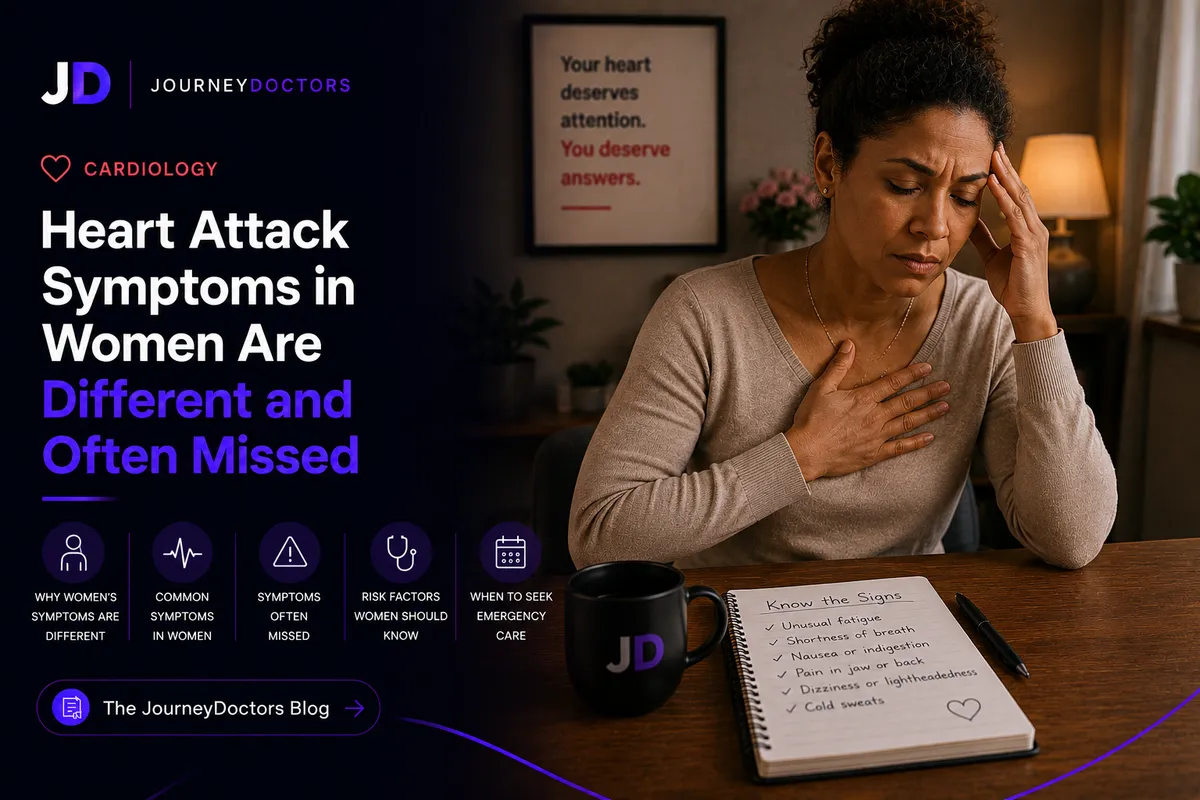
Cardiovascular disease kills more women than any other condition globally, including all cancers combined. Yet heart disease in women is systematically underdiagnosed, undertreated, and underresearched. A large part of this gap comes from a persistent clinical and cultural belief that the typical heart attack presents as sudden crushing chest pain in a middle-aged man. That presentation is real. It is also not the only presentation. Women having heart attacks frequently experience symptoms that are different in character, subtler in onset, and far more likely to be attributed to anxiety, gastroenterological problems, or stress, both by the woman herself and by the clinicians she sees. Understanding what a heart attack actually looks like in women could save your life or the life of someone you know.
Why Women's Heart Attacks Present Differently
The reasons for differences in heart attack presentation between women and men are biological, not just perceptual. Women more commonly develop coronary microvascular disease, a condition affecting the small blood vessels of the heart that does not produce the dramatic blockage of a large coronary artery seen in classic heart attacks. Women are more likely to have plaque erosion rather than plaque rupture as the mechanism of acute coronary events, which produces a different clinical syndrome. Women have more diffuse coronary artery disease rather than focal occlusions in large vessels. They also have different autonomic nervous system responses to ischemia, which changes how pain is perceived and where it is referred.
The result is that the classic presentation of a heart attack, sudden severe chest pressure or tightness radiating to the left arm and jaw in an older man with known coronary disease, while not absent in women, is far less representative of how women's cardiac events actually present. Women more commonly experience a cluster of symptoms that individually might be unremarkable but collectively represent cardiac emergency.
Symptoms Women Actually Experience
Chest Discomfort, But Not Always Pressure
Women having heart attacks do experience chest symptoms, but they describe them differently. Rather than the classic pressure or crushing sensation, women more often report chest tightness, aching, burning, or fullness. The sensation can be mild enough to be dismissed as heartburn or muscle soreness. Some women describe a sensation of something sitting on the chest or squeezing it. It may not be severe. It may not be on the left side. Central or diffuse chest discomfort is common. Any unexplained chest sensation in a woman over 40, particularly alongside the other symptoms described below, warrants cardiac evaluation.
Shortness of Breath
Dyspnea, particularly at rest or with minimal exertion, is one of the most common symptoms of a heart attack in women and is frequently the presenting complaint. A woman who was walking normally yesterday and finds herself breathless climbing stairs today may be experiencing a cardiac event. Shortness of breath can occur without any chest pain at all in women, a presentation that is much rarer in men and for which women are more likely to receive a non-cardiac diagnosis initially.
Nausea and Vomiting
Nausea, sometimes accompanied by vomiting, is significantly more common in women's heart attacks than in men's. The mechanism involves autonomic nervous system activation during cardiac ischemia, which has strong gastrointestinal effects. A woman who presents to an emergency department with nausea, shortness of breath, and vague chest discomfort is more likely to receive a gastrointestinal workup than a cardiac one, which represents a systematic clinical failure that has been documented in the literature.
Unusual Fatigue
Profound, unusual fatigue, not explainable by physical exertion or poor sleep, in the days or weeks preceding a heart attack is reported by a high proportion of women in retrospective studies. This prodromal fatigue is a warning sign that the heart is under stress before an acute event occurs. It is different from ordinary tiredness: it is overwhelming, new in character, and not relieved by rest. Women who experience sudden severe fatigue alongside any other cardiac symptoms should seek evaluation immediately, not rest and wait.
Upper Body Discomfort
Pain or discomfort in the upper back, between the shoulder blades, the jaw, neck, or arms (either arm, not just the left) occurs in women's heart attacks. Upper back pain, particularly a sudden onset of severe back pain between the shoulder blades, can be the primary symptom of an acute cardiac event in women and is frequently attributed to musculoskeletal causes.
Lightheadedness and Cold Sweat
Lightheadedness, dizziness, or near-fainting alongside other symptoms is a recognized cardiac warning sign. Cold, clammy sweating that is unexplained by temperature or exertion is an autonomic response to cardiac ischemia and should be taken seriously, particularly if it occurs in combination with chest, back, or arm symptoms.
Risk Factors for Women
JourneyDoctors
Not sure if this applies to you?
Describe your symptoms to Dr. Maya — our AI GP — and get a real clinical response in under a minute. Free to start.
Talk to Dr. MayaSeveral risk factors have a greater relative impact on cardiovascular risk in women than in men. Diabetes multiplies cardiovascular risk two to four times in women compared to two times in men. Smoking increases cardiovascular risk more in women, partly because smoking interacts with estrogen metabolism. A history of preeclampsia or gestational hypertension during pregnancy doubles a woman's long-term cardiovascular risk. Premature menopause (before age 40) significantly increases cardiovascular risk because of the earlier loss of estrogen's protective effects. Systemic lupus erythematosus and other autoimmune conditions are more prevalent in women and carry substantially elevated cardiovascular risk. Depression in women is an independent cardiovascular risk factor.
Traditional risk factors including hypertension, hyperlipidemia, sedentary lifestyle, family history of premature cardiovascular disease, and obesity apply equally to women and men, though they are underdiagnosed and undertreated in women due to the perception that heart disease is primarily a male condition.
Why Women's Symptoms Are Dismissed
Research has documented that women presenting with cardiac symptoms wait longer in emergency departments to be seen, are less likely to receive an ECG promptly, are more likely to receive anxiolytics rather than cardiac evaluation, and are more likely to be discharged without a cardiac diagnosis when the actual cause of their symptoms was cardiac. This happens to women with confirmed heart attacks, retrospectively. The reasons are complex: implicit bias, the persistence of the "typical" heart attack template, women's own tendency to minimize symptoms and delay seeking care, and healthcare systems calibrated to a male cardiovascular presentation that dominated early research.
The practical implication for women: take chest symptoms, dyspnea, unusual fatigue, and upper body pain seriously. Do not minimize them as anxiety or aging. Do not accept reassurance without a cardiac evaluation if the clinical picture is concerning. If you are sent home and feel worse, go back.
HEART Attack Recognition: What to Do
If you experience symptoms that might represent a heart attack, call emergency services immediately. Do not drive yourself. Do not wait to see if symptoms improve. Take aspirin 300 mg (unless allergic or contraindicated) while waiting for emergency services. The time between symptom onset and treatment is one of the most important determinants of outcome in heart attack: every minute of delay allows more cardiac muscle to die. The phrase "time is muscle" is not a slogan; it is physiology.
Coronary Artery Disease in Women: The Longer View
Cardiovascular disease develops approximately 10 years later in women than in men on average, due to the protective effects of estrogen on lipid metabolism, vascular inflammation, and endothelial function through the reproductive years. After menopause, women's cardiovascular risk rises to approach that of men within 10 to 15 years. This later onset means women's cardiovascular disease is often less aggressively evaluated in middle age, contributing to both underdiagnosis and delayed treatment.
Women who have had a heart attack have worse short-term outcomes than men of the same age, partly because of older age at presentation, higher rates of comorbid conditions, and delayed diagnosis. They are also less likely to be referred for cardiac rehabilitation, which significantly improves long-term outcomes. These disparities are documented, not inevitable, and advocacy for appropriate care is both reasonable and necessary.
When to See a Doctor
If you have cardiovascular risk factors and have not had a risk assessment including lipid panel, blood pressure evaluation, and discussion of family history, this is appropriate preventive care regardless of age. If you experience any of the symptoms described in this article, seek evaluation promptly. JourneyDoctors cardiologists can perform cardiovascular risk assessment and evaluate cardiac symptoms. Consultations start at $19.
Disclaimer: This article is for educational purposes only and does not constitute medical advice. If you think you may be having a heart attack, call emergency services immediately. Do not use a telemedicine service in an acute cardiac emergency.
Get proper care
Ready to speak with a specialist?
If anything in this article sounds familiar, the right next step is a proper evaluation. JourneyDoctors connects you with a specialist in minutes. Consultations from $19.
See a specialist nowFrequently Asked Questions
Can a woman have a heart attack with no chest pain?
Yes. Studies show that approximately 42 percent of women who experience heart attacks do not have chest pain as the primary symptom. The presenting symptoms are most commonly dyspnea, unusual fatigue, nausea, and upper body discomfort. A heart attack without chest pain is called a silent or atypical presentation, though "atypical" in this context means atypical relative to a male-derived template, not genuinely rare.
What is MINOCA?
MINOCA (myocardial infarction with non-obstructive coronary arteries) is a heart attack that occurs in the absence of significant coronary artery blockage on angiography. It is more common in women than men and is associated with mechanisms including coronary spasm, microvascular disease, and plaque erosion. MINOCA was historically underrecognized because the absence of obstructive disease was incorrectly interpreted as ruling out a cardiac cause. It requires specific management and has real implications for long-term cardiovascular risk.
Do women have different treatment for heart attacks?
The core treatment for acute heart attack (restoration of blood flow by opening the blocked artery, antiplatelet therapy, and secondary prevention) is the same regardless of sex. What differs is that women receive these treatments less promptly, are less likely to be referred for cardiac procedures, and have lower rates of guideline-adherent secondary prevention prescribing. These are treatment gaps, not intentional differences. Advocating for equivalent care is important.
Does the pill increase heart attack risk in women?
Combined oral contraceptives containing estrogen increase the risk of venous thromboembolism and, to a lesser extent, ischemic stroke, particularly in women who smoke, are over 35, or have migraine with aura. The absolute cardiovascular risk increase in healthy non-smoking women under 35 without migraine is very small. Progestin-only pills do not carry the same cardiovascular risks. The decision about contraceptive choice should be individualized based on cardiovascular risk profile.
At what age should women start cardiac screening?
Blood pressure should be checked at every clinical contact from early adulthood. Lipid panel is recommended from age 20 in people with risk factors or family history, and routinely from age 35. For women who have had preeclampsia, gestational diabetes, or premature menopause, earlier cardiovascular risk assessment is appropriate. Women at high risk based on family history or multiple risk factors may benefit from coronary calcium scoring (a CT-based test) to refine risk stratification.
Written by
Dr. Adaeze Nwosu
Cardiology