

How to Read a Blood Test: What Every Number Actually Means
Your blood test results came back and you are staring at a page of numbers and abbreviations. Here is exactly what each one means, written by a doctor.
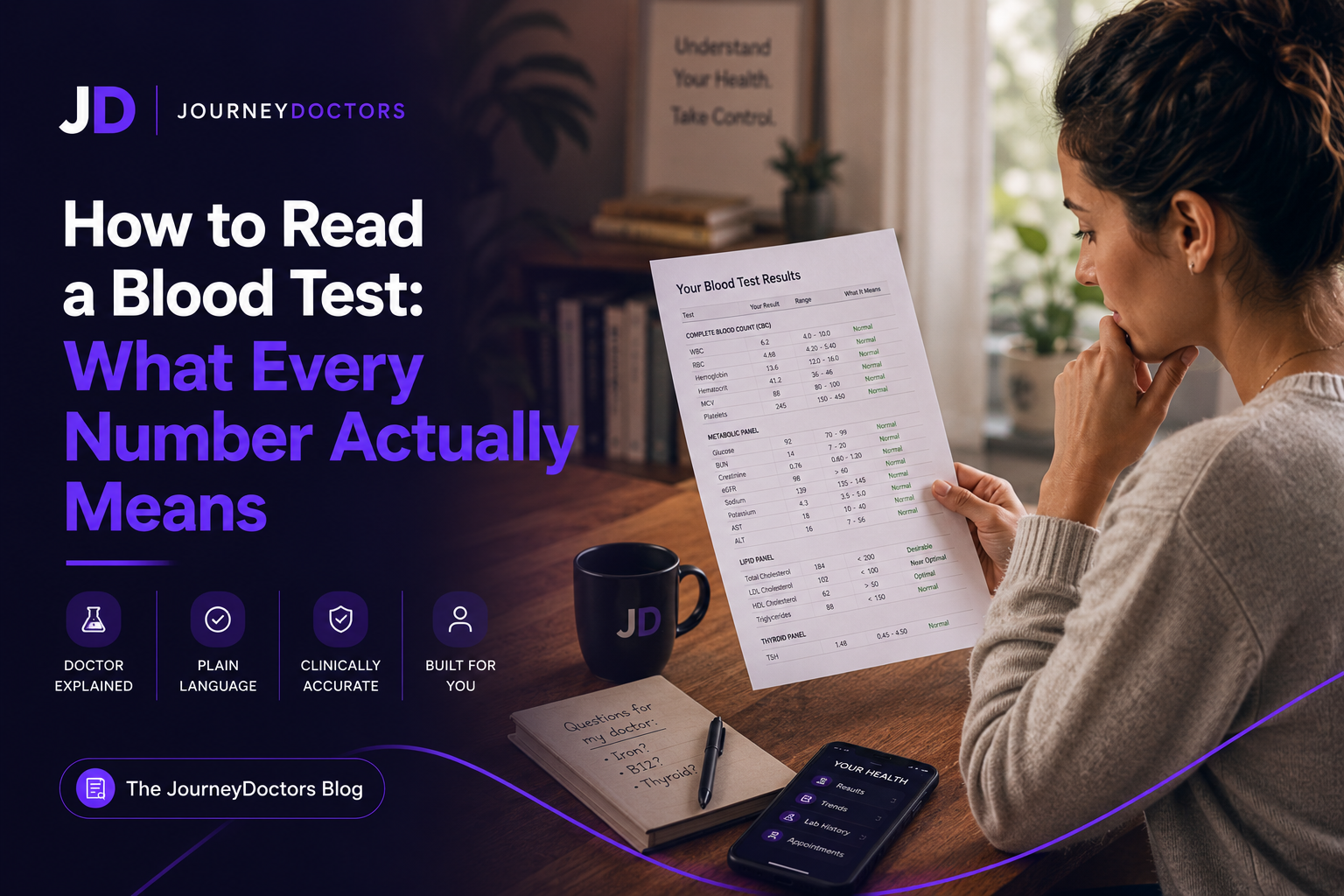
In my practice, one of the most common reasons patients book a follow-up is to go over lab results. Not because anything is wrong — but because the numbers arrived in a portal with no explanation, and the reference ranges printed next to them raised more questions than they answered. If you have ever looked at a flagged result and spent twenty minutes convincing yourself it meant something catastrophic, this article is for you.
Blood tests are one of the most informative tools in medicine. They measure dozens of biological processes from a single draw. Understanding what each panel is actually testing — and what a high or low value typically indicates — allows you to have a more productive conversation with your doctor and reduces the anxiety that comes from receiving results without context.
The Complete Blood Count (CBC)
The CBC is usually the first test ordered because it gives a broad picture of your blood cells and can signal a wide range of conditions.
Red Blood Cells and Hemoglobin
Red blood cells carry oxygen throughout your body using a protein called hemoglobin. Low hemoglobin is the definition of anemia — a condition affecting roughly one in three people globally, most commonly due to iron deficiency. Symptoms include fatigue, breathlessness on exertion, and pallor. Low hemoglobin in a woman of reproductive age almost always prompts an iron panel; in an older adult, it may warrant a more thorough workup to rule out chronic disease or blood loss.
High hemoglobin is less common but can indicate dehydration, living at high altitude, or in some cases a blood disorder called polycythemia vera. On its own, a slightly elevated reading often reflects lifestyle factors rather than disease.
White Blood Cells (WBC)
White blood cells are your immune system's frontline workers. An elevated count typically signals that your immune system is responding to something — an infection, inflammation, or occasionally a medication effect. A very high count in the absence of obvious infection warrants further testing. A low count (leukopenia) can result from viral infections, certain medications, or bone marrow issues, and is clinically more concerning when accompanied by symptoms.
Platelets
Platelets manage clotting. Low platelets (thrombocytopenia) can cause easy bruising or prolonged bleeding; very high counts (thrombocytosis) can in rare cases increase clotting risk. Mildly abnormal platelet counts in an otherwise healthy person are often benign and worth monitoring rather than immediately treating.
The Basic Metabolic Panel (BMP)
The BMP checks eight values covering electrolyte balance, kidney function, and blood sugar. It is frequently ordered alongside a CBC as part of a routine workup.
Sodium and Potassium
These electrolytes regulate fluid balance and nerve function. Low sodium (hyponatremia) often reflects excess fluid intake, kidney issues, or certain medications including diuretics and some antidepressants. Low potassium (hypokalemia) causes muscle cramps and fatigue and is commonly seen with diuretic use. Both values are usually easy to correct once the underlying cause is identified.
Creatinine and Blood Urea Nitrogen (BUN)
These two values measure kidney function. Creatinine is a waste product filtered by the kidneys; when kidneys are not working efficiently, creatinine rises. The estimated glomerular filtration rate (eGFR) is calculated from creatinine and gives a clearer picture of kidney function than creatinine alone. A single mildly elevated creatinine does not confirm kidney disease — dehydration, recent intense exercise, and certain medications all raise creatinine temporarily. A trend of rising creatinine over multiple tests is what concerns clinicians.
Glucose
A fasting glucose above 126 mg/dL on two separate occasions meets the diagnostic threshold for type 2 diabetes. Between 100 and 125 mg/dL is prediabetes. A non-fasting glucose result is harder to interpret and should be confirmed with a fasting draw or HbA1c if elevated.
The Lipid Panel
JourneyDoctors
Not sure if this applies to you?
Describe your symptoms to Dr. Maya — our AI GP — and get a real clinical response in under a minute. Free to start.
Talk to Dr. MayaThe lipid panel measures cholesterol and triglycerides and is the primary tool for assessing cardiovascular risk. It should ideally be drawn fasting for the most accurate triglyceride result.
LDL Cholesterol
LDL is the primary treatment target for cardiovascular risk. High LDL contributes to arterial plaque formation over decades. What counts as "too high" depends entirely on your overall risk profile. An LDL of 150 mg/dL in a healthy 30-year-old with no other risk factors is very different clinically from the same reading in a 55-year-old with hypertension and a family history of early heart disease. Do not interpret your LDL in isolation.
HDL Cholesterol
Higher HDL is generally associated with lower cardiovascular risk. Regular aerobic exercise is the most effective lifestyle intervention for raising HDL. Low HDL below 40 mg/dL in men or 50 mg/dL in women adds to cardiovascular risk calculation.
Triglycerides
Triglycerides above 200 mg/dL often reflect excess carbohydrate or alcohol intake, insulin resistance, or both. They are the lipid value most responsive to dietary change — cutting refined carbohydrates and alcohol while increasing physical activity can lower triglycerides significantly within weeks.
Thyroid Function (TSH)
Thyroid-stimulating hormone (TSH) is produced by the pituitary gland and tells the thyroid how much hormone to make. It is the most sensitive indicator of thyroid function because it rises before thyroid hormone levels fall and falls before they rise.
High TSH indicates that the pituitary is working harder than normal to stimulate the thyroid — this suggests the thyroid is underperforming (hypothyroidism). Symptoms include fatigue, weight gain, cold intolerance, dry skin, and constipation. Hypothyroidism affects roughly 5% of the population and is easily treated with daily levothyroxine.
Low TSH suggests the thyroid is overproducing hormone (hyperthyroidism). Symptoms include weight loss despite good appetite, palpitations, heat intolerance, and anxiety. The most common cause in younger women is Graves' disease, an autoimmune condition.
Liver Function Tests (LFTs)
A standard liver panel includes AST, ALT, alkaline phosphatase (ALP), and bilirubin. AST and ALT are enzymes released when liver cells are damaged. Mildly elevated levels — up to two to three times the upper limit of normal — are extremely common and most often reflect fatty liver disease, alcohol use, strenuous exercise (AST is also found in muscle), or certain medications including statins and some supplements.
Significantly elevated transaminases or a persistent upward trend warrant further investigation. In my practice, I find that patients are often more alarmed by mildly abnormal LFTs than the result justifies — context and trend matter far more than a single value.
The HbA1c
The glycated hemoglobin test (HbA1c) reflects average blood glucose over the preceding two to three months. It does not require fasting and is the standard monitoring tool for diabetes management.
- Below 5.7%: Normal
- 5.7% to 6.4%: Prediabetes
- 6.5% or above on two tests: Diabetes
For people already diagnosed with diabetes, the typical target is below 7%, though this is individualized based on age, comorbidities, and risk of hypoglycemia.
How to Approach an Abnormal Result
A result flagged outside the reference range is not a diagnosis. Reference ranges are statistical constructs — roughly 95% of healthy people fall within them, which means 5% of healthy people will have a value outside the range on any given test by chance alone. When you run 20 tests, at least one flagged result in a perfectly healthy person is statistically expected.
What matters is the clinical picture: your symptoms, your history, the trend over time, and how the individual value fits with everything else. A single abnormal result usually warrants a repeat test, not immediate treatment.
When to See a Doctor
If your results are flagged and your doctor has not already contacted you, do not wait. A JourneyDoctors physician can review your lab panel with you, explain what the values mean in the context of your health history, and advise whether any follow-up testing or lifestyle changes are indicated. Consultations start at $19 and are typically available within minutes.
Disclaimer: This article is for educational purposes only and does not constitute medical advice. Always consult a qualified healthcare professional for diagnosis and treatment of any medical condition.
Get proper care
Ready to speak with a specialist?
If anything in this article sounds familiar, the right next step is a proper evaluation. JourneyDoctors connects you with a specialist in minutes. Consultations from $19.
See a specialist nowFrequently Asked Questions
Do I need to fast before a blood test?
For a lipid panel and fasting glucose, yes — typically 8 to 12 hours of fasting. For a CBC, thyroid function, or HbA1c, fasting is not required. Your ordering doctor will specify if fasting is needed.
What does it mean when multiple values are abnormal?
Multiple abnormal values together often tell a more coherent story than any single result. For example, elevated glucose combined with high triglycerides and low HDL points toward insulin resistance. This is why reviewing results in context matters.
How often should I get blood tests?
For a healthy adult with no chronic conditions, a basic panel every one to two years is reasonable. More frequent testing is appropriate if you have hypertension, diabetes, kidney disease, or are on medications that require monitoring.
Can I improve my results without medication?
In many cases, yes. LDL responds to dietary saturated fat reduction and increased soluble fiber. Triglycerides respond to cutting refined carbohydrates and alcohol. Blood glucose responds to weight loss and exercise. TSH abnormalities generally require medication. Your doctor can advise which approach is appropriate for your specific values.
Why are my results different from last year even though I feel the same?
Many blood values fluctuate with hydration, recent diet, sleep, exercise, and time of day. Small changes between tests are often physiological noise rather than a meaningful clinical change. Trends over multiple tests are more informative than year-to-year comparisons.
Written by
Dr. Maya Ellis
General Practice