

The HPV Vaccine: What It Does, Who Should Get It, and Why Catch-Up Vaccination Matters
The HPV vaccine is one of the few medical interventions that directly prevents cancer. Yet uptake remains far below where it should be, largely due to myths that the evidence does not support.
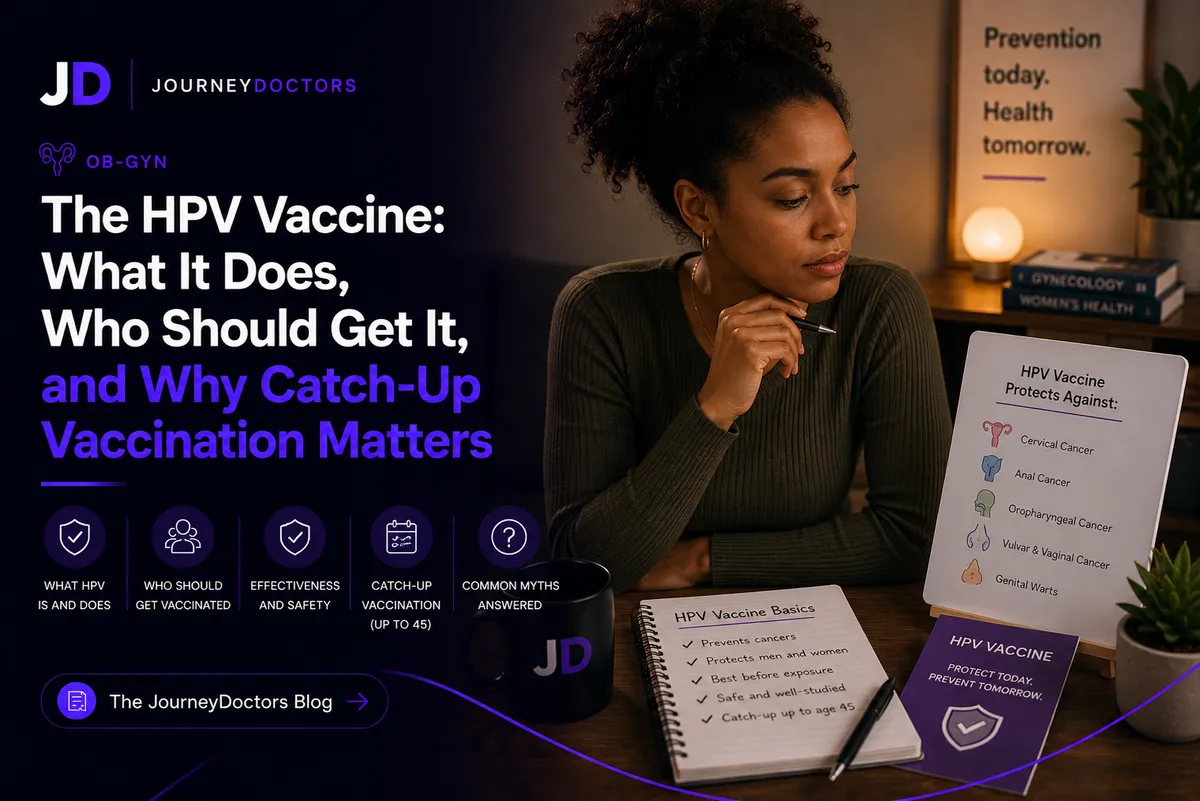
Cervical cancer was once among the leading causes of cancer death in women in high-income countries. It has been dramatically reduced, though not eliminated, by two things: cervical cancer screening programs and, more recently, the HPV vaccine. We now have a vaccine that directly prevents the infection responsible for roughly 99% of cervical cancers, as well as cancers of the vulva, vagina, anus, penis, and throat. The prevention of several cancers through a safe vaccine is an extraordinary development in medicine. The vaccine's uptake, particularly in adults, remains inadequate. Much of the hesitancy traces back to misinformation that is worth addressing directly.
What HPV Is
Human papillomavirus is the most common sexually transmitted infection worldwide. Most sexually active adults will contract at least one strain of HPV at some point in their lives. The majority of HPV infections clear on their own within one to two years without causing any symptoms or lasting harm. The immune system handles them without the person ever knowing they were infected.
The clinical problem is the minority of infections that do not clear. Persistent infection with high-risk HPV strains, particularly HPV 16 and 18, drives the development of precancerous and cancerous changes in cervical cells over a period of years to decades. HPV 16 alone accounts for roughly half of all cervical cancers. High-risk HPV strains also cause the majority of anal, penile, vulvar, vaginal, and oropharyngeal (throat) cancers. Low-risk strains, particularly HPV 6 and 11, cause genital warts, which are not cancerous but are distressing and difficult to treat.
What the Vaccine Does
The currently available HPV vaccine in most countries (Gardasil 9) protects against nine strains: HPV 6, 11, 16, 18, 31, 33, 45, 52, and 58. These nine strains account for approximately 90% of cervical cancers and 90% of genital warts. The vaccine is prophylactic, meaning it prevents infection. It does not treat existing HPV infection and does not clear current infections or reverse existing precancerous changes. This is why vaccination before sexual debut (and therefore before likely exposure) provides the greatest individual benefit.
The vaccine works by producing antibodies against the virus's outer protein coat. When exposed to HPV after vaccination, these antibodies neutralize the virus before it can establish infection. Clinical trials demonstrated near-complete protection against HPV 16 and 18-related cervical precancer in individuals vaccinated before exposure. Population-level data from countries with high vaccination rates show steep reductions in cervical precancers, genital warts, and, in countries with programs old enough to generate the data, cervical cancer incidence.
Who Should Get It
JourneyDoctors
Not sure if this applies to you?
Describe your symptoms to Dr. Maya — our AI GP — and get a real clinical response in under a minute. Free to start.
Talk to Dr. MayaThe primary target for HPV vaccination is adolescents aged 9 to 14, before sexual debut. Two doses given six to twelve months apart are sufficient in this age group, and the immune response is stronger than in older recipients. In many countries, school-based programs provide vaccination at age 11 to 12.
People who did not receive the vaccine in adolescence can still benefit from vaccination up to age 45. The benefit is somewhat lower in adults who have already been sexually active, because some will have already been exposed to one or more vaccine strains. However, most sexually active adults have not been exposed to all nine strains covered by the vaccine, and protection against unexposed strains is complete. Individuals who have previously had HPV infection or abnormal cervical smears can still be vaccinated and still benefit.
In adults aged 27 to 45, the decision to vaccinate should involve a conversation with a clinician who can weigh individual circumstances: number of prior partners, current relationship status, and personal risk tolerance. This is not a case where the recommendation is the same for everyone.
Three doses over six months are required for adults aged 15 and older. The schedule is the first dose, then a second dose one to two months later, then a third dose six months after the first.
The Safety Record
The HPV vaccine has been administered to hundreds of millions of people globally and has one of the most extensively monitored safety profiles of any vaccine in history. The evidence on safety is clear and consistent across multiple countries, multiple health systems, and multiple decades of post-marketing surveillance.
Common side effects are injection site pain, redness, and swelling. Fainting after vaccination (vasovagal syncope) occurs with most injections in adolescents and is managed by having recipients sit or lie down for fifteen minutes after vaccination. These effects are transient and benign.
The specific concern that the vaccine causes autoimmune conditions or complex regional pain syndrome has been extensively investigated following a cluster of cases in Japan and Scandinavia in the early 2010s. Large epidemiological studies involving millions of vaccinated individuals have not found evidence of a causal link between HPV vaccination and these conditions at rates above background. The original cases appear to have reflected the natural background rate of these conditions in the adolescent population rather than a vaccine effect. The scientific consensus on vaccine safety is robust.
The concern that vaccination encourages sexual risk-taking has also been examined in research and not supported. Studies comparing sexual behaviors of vaccinated versus unvaccinated adolescents find no difference in age of sexual debut or rates of other sexually transmitted infections.
What the Vaccine Does Not Replace
The HPV vaccine does not replace cervical cancer screening. Even fully vaccinated individuals need cervical smear tests (Pap smear or HPV test) according to standard screening guidelines, because the vaccine does not cover every HPV strain capable of causing cervical cancer, and because some vaccinated individuals may have been exposed before vaccination.
Standard screening guidelines vary by country but generally recommend starting cervical screening at age 21 to 25 and continuing every three to five years depending on age and prior results. The combination of vaccination and screening provides substantially better protection than either alone.
The vaccine also does not protect against other sexually transmitted infections. Condoms provide meaningful reduction in HPV transmission risk and are an important additional protective measure, though they do not provide complete protection because HPV can infect areas not covered by a condom.
HPV Vaccination in Males
HPV vaccination of males provides direct benefits: protection against genital warts and against HPV-related cancers of the anus, penis, and oropharynx. Oropharyngeal cancer, the majority of which is now HPV-associated, is increasing in incidence in high-income countries and occurs more frequently in men. Male vaccination also contributes to herd immunity by reducing transmission, which provides additional protection to unvaccinated individuals.
Males aged 9 to 26 are recommended for routine vaccination in most guidelines. Males aged 27 to 45 can discuss vaccination with their clinician given individual circumstances.
Adults Who Never Got Vaccinated
Catch-up vaccination in adults up to 45 is approved and, in many circumstances, clinically appropriate. The prevailing underuse of catch-up vaccination reflects a combination of cost barriers, lack of physician recommendation, and the misconception that vaccination is only relevant for adolescents. If you are under 45 and were not vaccinated as an adolescent, it is worth discussing with your clinician whether vaccination is appropriate for you. The conversation takes less than five minutes and could be the most consequential preventive intervention available to you.
When to See a Doctor
Discuss HPV vaccination with a clinician if you are under 45 and have not previously been vaccinated, if you are approaching your next cervical screening and want to understand how vaccination changes your risk profile, or if you have had an abnormal cervical smear result and want to understand what HPV testing means. A JourneyDoctors OB-GYN can review your vaccination history and cervical screening schedule and provide personalized guidance.
Disclaimer: This article is for educational purposes only and does not constitute medical advice. Always consult a qualified healthcare professional for personalized recommendations.
Get proper care
Ready to speak with a specialist?
If anything in this article sounds familiar, the right next step is a proper evaluation. JourneyDoctors connects you with a specialist in minutes. Consultations from $19.
See a specialist nowFrequently Asked Questions
Can you get the HPV vaccine if you have already had HPV?
Yes. Prior HPV infection with one or more strains does not preclude vaccination and does not prevent benefit from protection against strains you have not been exposed to. Having had HPV does not mean all nine vaccine strains have been encountered.
Does the HPV vaccine need to be repeated or have a booster?
Current evidence does not support the need for booster doses. Studies measuring antibody levels more than a decade after vaccination show sustained protection. No booster schedule is currently recommended by major health authorities.
Does the vaccine work if given after starting sexual activity?
Yes, though with somewhat reduced benefit compared to vaccination before any sexual exposure. Most sexually active adults have not encountered all nine vaccine strains. Protection against unexposed strains is complete regardless of prior sexual activity.
Is the vaccine covered by insurance?
In many countries, adolescent vaccination is covered by national programs. Adult catch-up vaccination coverage varies by insurer and country. In the US, it is covered by most insurance plans for ages 9 to 26, with variable coverage for ages 27 to 45. Check with your insurer for specific coverage details.
If I am vaccinated, do I still need regular Pap smears?
Yes. The vaccine does not cover all cancer-causing HPV strains, and some individuals may have been exposed before vaccination. Cervical cancer screening according to current guidelines remains necessary for all individuals with a cervix, regardless of vaccination status.
Written by
Dr. Fatima Al-Rashid
Obstetrics and Gynecology