

Insulin Resistance: The Silent Metabolic Shift That Affects 1 in 3 Americans
Insulin resistance occurs when cells throughout the body fail to respond normally to insulin, forcing the pancreas to produce progressively more of it to maintain blood sugar control. About 88 million American adults have prediabetes, most driven by this.
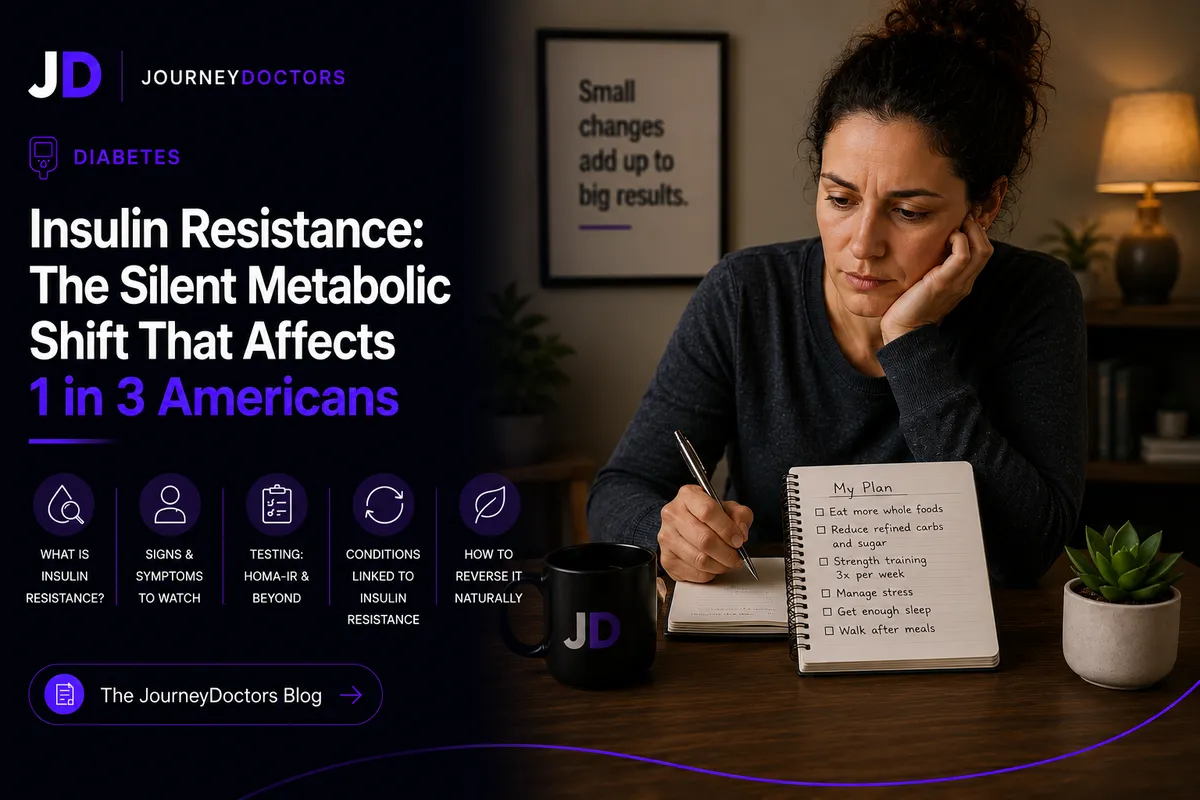
Insulin resistance is a state in which the cells of the liver, muscle, and adipose tissue respond less effectively to the hormone insulin than they should. Insulin's primary role is to signal cells to take up glucose from the bloodstream — when that signal is impaired, blood glucose rises, and the pancreas compensates by producing more insulin. For years, or even decades, this hyperinsulinemic compensation can keep blood glucose in a near-normal range. The person feels more or less fine. Routine glucose testing may be normal. Yet the chronically elevated insulin is doing damage throughout this time — driving fat storage (particularly abdominal visceral fat), inflammation, accelerated ovarian dysfunction in women, fatty liver development, and progressive pancreatic beta-cell exhaustion. Insulin resistance is not a disease with a dramatic onset. It is a metabolic drift that affects approximately 88 million American adults, most of whom have no idea it is happening.
What Insulin Resistance Is, and Why It Happens
Insulin is secreted by the beta cells of the pancreatic islets in response to rising blood glucose, primarily after meals. It binds to insulin receptors on cell surfaces and triggers a signaling cascade that opens glucose transporters (particularly GLUT4 in muscle and fat cells) to allow glucose entry. In insulin-resistant cells, this signaling cascade is blunted — fewer receptors may be expressed, post-receptor signaling pathways may be dysfunctional, or chronic inflammation and excess intracellular lipids may directly impair the pathway.
The causes are multi-factorial. Excess visceral (intra-abdominal) fat is the most potent driver — visceral fat is metabolically active and releases free fatty acids and inflammatory cytokines (including TNF-alpha and IL-6) that directly impair insulin signaling in nearby and distant tissues. Physical inactivity contributes significantly because skeletal muscle is the dominant site of insulin-stimulated glucose disposal, and inactive muscle has fewer insulin receptors and reduced GLUT4 expression. Chronic sleep deprivation, even partial (5–6 hours per night), produces measurable insulin resistance within days in healthy volunteers. Excess dietary refined carbohydrates and fructose promote hepatic fat accumulation and hepatic insulin resistance. Chronic stress, via cortisol-driven glucose elevation and fat redistribution, worsens resistance further. Some genetic predisposition exists — insulin resistance clusters in families and is more prevalent in South Asian, Hispanic/Latino, and Black populations at lower BMI thresholds than in white populations.
Physical Signs of Insulin Resistance
Acanthosis Nigricans
The most specific dermatological sign of insulin resistance is acanthosis nigricans — velvety, dark, hyperpigmented skin thickening at the back of the neck, armpits, and groin. It is caused by excess insulin (not glucose) stimulating insulin-like growth factor 1 (IGF-1) receptors on keratinocytes, driving their proliferation. Acanthosis nigricans in a child or teenager is a serious signal of underlying metabolic disease. Many people notice it as "dirty-looking" skin that does not wash off and seek a dermatology referral before anyone thinks to evaluate their metabolic status.
Central (Abdominal) Obesity
Waist circumference is a strong surrogate for visceral fat accumulation. The metabolic risk thresholds are: above 35 inches (88 cm) for women and above 40 inches (102 cm) for men, though lower thresholds apply to South Asian, East Asian, and some Hispanic populations (above 31.5 inches for women, above 35.5 inches for men). High-risk waist circumference in the setting of other metabolic features is sufficient clinical basis to evaluate for insulin resistance even when BMI is below 30.
Fatigue, Brain Fog, and Energy Instability
Insulin resistance frequently manifests as post-meal fatigue (crashing 1–2 hours after eating), difficulty concentrating particularly in the mid-afternoon, and a persistent sense of low-level tiredness that does not improve with sleep. These symptoms reflect glucose delivery dysregulation at the cellular level — cells are not efficiently absorbing glucose even when blood levels are adequate, and the compensatory insulin surges create reactive hypoglycemia-like patterns after high-carbohydrate meals.
Intense Carbohydrate Cravings
The craving for refined carbohydrates and sweets that many insulin-resistant individuals experience is not purely psychological. Dysregulated glucose homeostasis and the hormonal effects of chronically elevated insulin (suppressing glucagon and growth hormone, impairing fat oxidation) make glucose the body's preferred and sometimes only efficient fuel. When blood glucose dips after a carbohydrate-driven spike, hunger signals become urgent. This is a physiological trap, not a character flaw.
Frequent Urination and Increased Thirst
When blood glucose rises above approximately 180 mg/dL, it exceeds the renal threshold and spills into urine, drawing water with it osmotically — producing increased urination and secondary thirst. In early insulin resistance with compensated glucose levels this does not occur, but as compensation begins to fail in prediabetes and early type 2 diabetes these symptoms emerge. Their presence indicates the process has progressed significantly.
Elevated Triglycerides and Low HDL
The lipid pattern most associated with insulin resistance is elevated triglycerides (above 150 mg/dL) combined with low HDL cholesterol (below 40 mg/dL in men, below 50 mg/dL in women). This combination, part of the diagnostic criteria for metabolic syndrome, reflects hepatic insulin resistance driving increased VLDL triglyceride production. Small, dense LDL particles — more atherogenic than large fluffy LDL — are also characteristic. A person can have a "normal" total cholesterol and LDL while having a highly atherogenic insulin-resistant lipid pattern.
Measuring Insulin Resistance: The HOMA-IR Test
JourneyDoctors
Not sure if this applies to you?
Describe your symptoms to Dr. Maya — our AI GP — and get a real clinical response in under a minute. Free to start.
Talk to Dr. MayaDirect measurement of insulin sensitivity requires complex research tools. In clinical practice, the Homeostatic Model Assessment of Insulin Resistance (HOMA-IR) is the most widely used proxy measure. It is calculated from a fasting glucose and fasting insulin level:
HOMA-IR = (fasting insulin [mU/L] × fasting glucose [mmol/L]) / 22.5
Interpretation (approximate, as normal ranges vary somewhat by laboratory and population):
- Below 1.0: Optimal insulin sensitivity
- 1.0–1.9: Normal range, mild or absent resistance
- 2.0–2.9: Early insulin resistance
- Above 3.0: Significant insulin resistance
Notably, a fasting insulin level alone — even without calculating HOMA-IR — is informative. Most conventional labs do not routinely include fasting insulin in metabolic panels; it must be specifically requested. A fasting insulin above 10–15 mU/L in an individual with normal glucose is suggestive of compensated insulin resistance. This test is inexpensive, clinically useful, and underused in primary care.
Insulin Resistance and Its Downstream Conditions
Prediabetes and Type 2 Diabetes
Prediabetes is defined as fasting glucose 100–125 mg/dL (or HbA1c 5.7–6.4%). Without intervention, approximately 25–37% of people with prediabetes develop type 2 diabetes within 3–5 years. With intensive lifestyle modification, the progression to diabetes can be prevented or substantially delayed — the Diabetes Prevention Program trial demonstrated a 58% reduction in diabetes incidence with lifestyle intervention (7% weight loss and 150 minutes of moderate activity per week) compared to placebo.
Non-Alcoholic Fatty Liver Disease (NAFLD) / MASLD
Hepatic insulin resistance is a central driver of fatty liver disease — now renamed metabolic dysfunction-associated steatotic liver disease (MASLD). Excess insulin drives lipogenesis in the liver and impairs fatty acid oxidation, leading to triglyceride accumulation in hepatocytes. NAFLD/MASLD affects approximately 25% of the global population and up to 38% of American adults; in the context of insulin resistance and metabolic syndrome, its prevalence approaches 70–80%. Without intervention, a subset progresses to non-alcoholic steatohepatitis (MASH), fibrosis, cirrhosis, and hepatocellular carcinoma.
Polycystic Ovary Syndrome (PCOS)
Insulin resistance is central to PCOS pathophysiology in at least 65–70% of affected women, including lean women with PCOS. Elevated insulin stimulates ovarian theca cells to produce excess androgens (testosterone and androstenedione), disrupting follicular development, impairing ovulation, and producing the hormonal hallmarks of the condition. Treating insulin resistance — through lifestyle modification, and often metformin — is a cornerstone of PCOS management because it directly addresses the upstream hormonal driver.
Metabolic Syndrome
Metabolic syndrome is a cluster of interrelated risk factors that substantially increases cardiovascular disease and type 2 diabetes risk. Diagnostic criteria require three or more of: elevated waist circumference, elevated triglycerides (above 150 mg/dL), low HDL, elevated blood pressure (above 130/85 mmHg), and elevated fasting glucose (above 100 mg/dL). Insulin resistance is the common physiological thread linking all five components. Approximately 35% of US adults meet criteria for metabolic syndrome.
Reversing Insulin Resistance: Evidence-Based Strategies
Diet
No single dietary pattern is uniquely effective, but strong evidence supports reducing refined carbohydrates and added sugars — which drive the largest glucose and insulin spikes — and prioritizing dietary fiber, lean protein, and healthy fats. Low-glycemic index diets, Mediterranean-pattern diets, and low-carbohydrate diets all improve insulin sensitivity, with low-carb approaches often producing faster initial improvement in glucose and insulin metrics. Fructose — particularly from sugar-sweetened beverages and added sugars — deserves particular attention, as it is exclusively metabolized in the liver and directly drives hepatic insulin resistance and NAFLD at doses common in American diets. Reducing ultra-processed food intake and increasing dietary fiber (targeting at least 25–30 g daily) are achievable dietary changes with consistent evidence for benefit.
Exercise
Skeletal muscle is the dominant site of insulin-stimulated glucose disposal, and exercise is the single most powerful lifestyle intervention for improving insulin sensitivity. A single bout of moderate exercise improves insulin sensitivity for 24–72 hours through GLUT4 translocation to muscle cell membranes — this is why consistent frequency matters more than occasional intense sessions. Combining aerobic exercise (150 minutes of moderate activity per week) with resistance training (2–3 sessions per week) produces greater benefit than either alone. For individuals with insulin resistance, each week of consistent exercise produces measurable improvement in HOMA-IR.
Sleep
Chronically sleeping fewer than 7 hours produces insulin resistance equivalent to gaining 4–5% body weight. Sleep restriction elevates cortisol, increases ghrelin (hunger hormone), and decreases leptin (satiety hormone), driving a hormonal environment that promotes insulin resistance, abdominal fat accumulation, and overeating. Addressing obstructive sleep apnea — which is both worsened by insulin resistance and worsens it — can produce clinically meaningful improvements in glucose metabolism independent of weight change.
Stress Reduction
Chronic psychological stress elevates cortisol, which raises blood glucose, drives visceral fat deposition (cortisol specifically directs fat storage to the abdomen), and impairs insulin signaling directly. Stress management is not a soft intervention — it has quantifiable effects on cortisol, insulin, and metabolic risk markers. Mindfulness-based stress reduction (MBSR), regular physical activity, and adequate sleep all meaningfully reduce chronic cortisol exposure.
Metformin
Metformin is the most prescribed medication for type 2 diabetes and prediabetes in the world. It primarily works by reducing hepatic glucose production (gluconeogenesis) via AMPK activation, improving hepatic insulin sensitivity. It does not cause hypoglycemia when used without other glucose-lowering agents. It is generally well tolerated; the most common side effects (GI discomfort, nausea) are dose-dependent and minimized by starting with low doses, taking with food, and using extended-release formulations. Metformin is FDA-approved for type 2 diabetes and used off-label for prediabetes. The Diabetes Prevention Program demonstrated that metformin reduced diabetes progression by 31% — less than lifestyle modification alone (58%), but highly relevant for people who are unable to achieve adequate lifestyle change.
When to See a Doctor
Request fasting glucose, fasting insulin, HbA1c, a lipid panel with triglycerides and HDL, and a waist circumference measurement at your next physical if you have any combination of the following: central obesity, fatigue after eating, intense carbohydrate cravings, acanthosis nigricans, irregular periods, family history of type 2 diabetes, or a prior gestational diabetes diagnosis. These tests are inexpensive and can identify insulin resistance years before glucose becomes abnormal — which is precisely when intervention is most effective. JourneyDoctors connects you with trained specialists from $19. Start a consultation today — no waiting room, no referral needed.
This article is for educational purposes only and does not constitute medical advice. Always consult a qualified healthcare professional for diagnosis and treatment.
Get proper care
Ready to speak with a specialist?
If anything in this article sounds familiar, the right next step is a proper evaluation. JourneyDoctors connects you with a specialist in minutes. Consultations from $19.
See a specialist nowFrequently Asked Questions
Can you have insulin resistance if you are not overweight?
Yes. Approximately 20–30% of people with normal BMI have significant insulin resistance — a condition sometimes called "metabolically obese normal weight" (MONW) or "lean TOFI" (thin outside, fat inside). These individuals often have high visceral fat relative to their total body size, low muscle mass, physical inactivity, or genetic predisposition. Waist circumference measurement and HOMA-IR are more informative than BMI for assessing metabolic risk in this population.
Is insulin resistance the same as prediabetes?
Not exactly. Insulin resistance is the physiological dysfunction that underlies prediabetes, but the two are not identical. A person can have significant insulin resistance — with compensatory hyperinsulinemia and normal glucose levels — for years before glucose rises to the prediabetic range. Prediabetes represents the stage at which the compensatory insulin production is no longer sufficient to maintain normal glucose, and glucose begins rising. Insulin resistance is the earlier, upstream event.
How long does it take to reverse insulin resistance?
With consistent lifestyle intervention — reduced refined carbohydrate intake, 150+ minutes of weekly moderate exercise, adequate sleep — measurable improvements in insulin sensitivity begin within 2–4 weeks. HOMA-IR improvements of 30–50% are achievable within 3 months of sustained lifestyle change. The timeline depends on the severity of the starting state, the consistency of intervention, and weight loss if applicable. Even without reaching normal weight, lifestyle-driven improvements in insulin sensitivity are proportional and clinically meaningful.
Does intermittent fasting help insulin resistance?
Evidence supports intermittent fasting (particularly time-restricted eating) as a useful strategy for some individuals with insulin resistance. Reducing the daily eating window to 8–10 hours lowers overall insulin exposure, gives the body extended periods to deplete glycogen and enter fat-oxidizing states, and has been shown in randomized trials to reduce fasting insulin, HOMA-IR, blood pressure, and visceral fat. It is not superior to other caloric restriction approaches for most metabolic outcomes, but some people find it more sustainable than continuous caloric restriction. It should not be undertaken without medical discussion in people on diabetes medications.
Will losing weight reverse insulin resistance completely?
Weight loss — particularly the loss of visceral fat — is the most powerful reversal tool for most people. A 5–10% reduction in body weight produces disproportionately large improvements in insulin sensitivity, because visceral fat is metabolically disproportionate to its volume. Some individuals who lose significant weight (through intensive lifestyle, GLP-1 medications, or bariatric surgery) achieve complete normalization of insulin sensitivity and glucose metabolism. However, physical activity independently improves insulin sensitivity via GLUT4 upregulation regardless of weight change — so exercise benefits insulin resistance even when weight does not change.
Written by
Dr. Maya Ellis
General Practice