

Heart Palpitations: When They Are Nothing and When They Are Not
Most palpitations are benign. Some are not. The difference lies in specific accompanying symptoms that most people do not know to watch for.
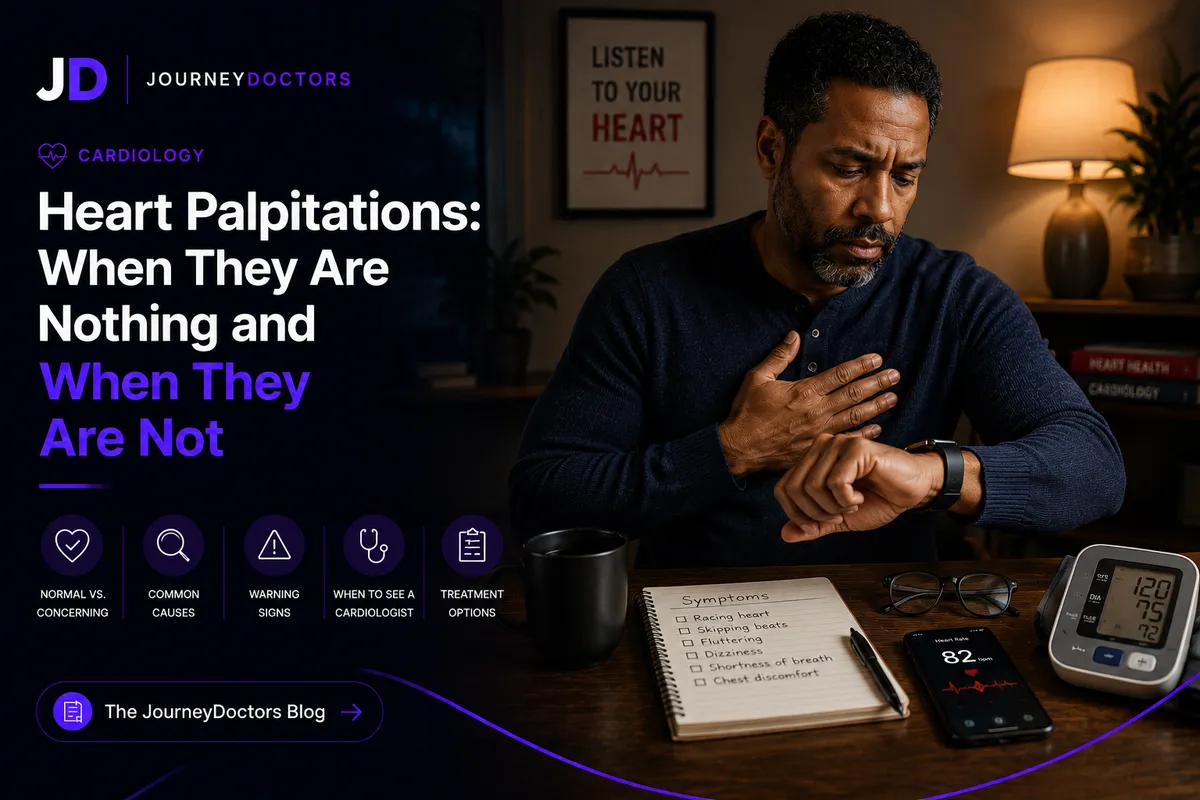
Heart palpitations are one of the most common symptoms I evaluate as a cardiologist, and also one of the most anxiety-provoking for patients. The sensation of your heart beating too fast, too hard, skipping, or fluttering is alarming because it feels like the most vital organ in your body is malfunctioning. In most cases, palpitations are benign. They reflect normal cardiac variation or extra beats that are uncomfortable but clinically unimportant. In a smaller but meaningful subset of cases, palpitations signal an arrhythmia that requires treatment or an underlying cardiac condition that needs to be identified. Knowing which symptoms distinguish one from the other is the clinically useful knowledge most people lack.
Surveys suggest that palpitations account for approximately 16 percent of primary care consultations and are among the top five symptoms prompting visits to cardiologists. Most of these patients are anxious, have searched their symptoms online, and arrive convinced they have something serious. The majority leave with reassurance after a thorough evaluation. But the minority who do have significant underlying pathology are the reason this symptom always deserves appropriate assessment rather than dismissal.
What Palpitations Actually Are
Palpitations are the subjective awareness of the heartbeat, whether normal or abnormal. The heart beats continuously without most people being aware of it. When you notice your heart beating, the awareness itself is the palpitation. This awareness can be triggered by an actual cardiac event, such as an extra beat or a period of rapid rate, or by heightened sensitivity to a normal heartbeat, which is common in anxiety and during periods of stress.
The most common descriptions I hear: a flip-flop or thud sensation in the chest, a skipped beat, a racing heart, a pounding that seems too forceful, or a brief flutter. Each of these can correspond to different underlying mechanisms.
Common Benign Causes
Premature Atrial and Ventricular Contractions
Premature beats are the most common cause of palpitations and are present in virtually everyone if monitoring is long enough. Premature atrial contractions (PACs) originate in the upper chambers; premature ventricular contractions (PVCs) originate in the lower chambers. Both produce a beat that fires slightly early, followed by a compensatory pause while the heart resets, then a stronger-than-normal beat as the heart fills more fully during the pause. This is typically experienced as a skipped beat or a thud.
Isolated PACs and PVCs in a structurally normal heart are benign. They do not increase the risk of sudden cardiac death, do not require treatment in most cases, and will often reduce with caffeine reduction, improved sleep, stress management, and correction of electrolyte abnormalities. The reassurance that these extra beats are not dangerous is one of the most relieving things I can offer patients, though getting to that reassurance requires an appropriate evaluation to confirm there is nothing structural going on.
Sinus Tachycardia
This is a normal increase in heart rate in response to a stimulus: exercise, anxiety, fever, dehydration, anemia, or stimulant use. The heart is beating fast but in a normal rhythm. The palpitations feel like a racing heart and resolve as the trigger resolves. Persistent unexplained sinus tachycardia at rest warrants investigation for thyroid disease, anemia, or other underlying causes.
Caffeine, Alcohol, and Stimulants
Caffeine in excessive amounts is one of the most consistent palpitation triggers I encounter. The threshold varies substantially between individuals, with some people noticing effects after a single cup of coffee and others tolerating several without issue. Alcohol, paradoxically, can both trigger palpitations acutely (particularly in large quantities) and cause a phenomenon called holiday heart syndrome, where atrial fibrillation develops in someone without structural heart disease after heavy drinking. Decongestants, ADHD medications, certain cold medicines, and energy drinks containing multiple stimulants are also common culprits.
Anxiety and Stress
Anxiety increases sympathetic tone, raises heart rate, and increases cardiac sensitivity. During a panic attack, the combination of tachycardia, hyperawareness of bodily sensations, and catastrophic interpretation can produce severe palpitation symptoms. The challenging aspect is that palpitations can also provoke anxiety, making the two conditions difficult to disentangle. A 24-hour or 48-hour cardiac monitor worn during symptomatic episodes will clarify whether the palpitations have a cardiac correlate or purely reflect heightened awareness of normal cardiac function.
Palpitations That Require Urgent Evaluation
JourneyDoctors
Not sure if this applies to you?
Describe your symptoms to Dr. Maya — our AI GP — and get a real clinical response in under a minute. Free to start.
Talk to Dr. MayaCertain accompanying symptoms transform palpitations from a likely benign complaint into an urgent evaluation. If you experience palpitations alongside any of the following, seek medical attention promptly rather than waiting for a scheduled appointment.
Syncope or Near-Syncope
Loss of consciousness or near-loss of consciousness (feeling like you are about to faint) during palpitations is a red flag. This suggests the arrhythmia may be producing hemodynamically significant changes in cardiac output. Ventricular tachycardia, which is rapid heart rate originating in the lower chambers, can cause this pattern and is a potentially life-threatening arrhythmia requiring immediate evaluation.
Sustained Rapid Rate Over Several Hours
Palpitations that begin abruptly and persist for hours, particularly if associated with a very rapid regular or irregular rate, may represent supraventricular tachycardia (SVT) or atrial fibrillation. Both of these can be managed but benefit from identification and sometimes acute treatment to restore normal rhythm. Atrial fibrillation specifically carries stroke risk related to clot formation in the left atrial appendage, and patients in sustained atrial fibrillation for more than 48 hours require anticoagulation before cardioversion.
Chest Pain or Pressure
Palpitations with chest pain, particularly pressure, tightness, or pain radiating to the arm, jaw, or back, raise concern for ischemia. This combination warrants emergency evaluation, not watchful waiting.
Shortness of Breath at Rest
Palpitations with dyspnea at rest, particularly in someone with known heart disease or risk factors, suggest the arrhythmia may be affecting cardiac function. This is different from the shortness of breath that accompanies anxiety; it has a more physical quality and may be accompanied by decreased exercise tolerance.
Family History of Sudden Death
Palpitations in someone with a family history of sudden cardiac death in young relatives warrant evaluation for inherited channelopathies such as long QT syndrome, Brugada syndrome, or hypertrophic cardiomyopathy. These conditions can cause life-threatening arrhythmias in otherwise healthy young people and are identifiable with specific testing.
Common Significant Arrhythmias
Atrial Fibrillation
Atrial fibrillation (AFib) is the most common sustained cardiac arrhythmia, affecting over 33 million people globally. It involves chaotic electrical activity in the atria, producing an irregular and often rapid ventricular rate. AFib significantly increases stroke risk (5 to 7 times higher than the general population) and can cause heart failure in sustained cases. The palpitation in AFib is characteristically irregular, described as a disorganized fluttering. AFib can be paroxysmal (comes and goes), persistent, or permanent. Treatment addresses both rate or rhythm control and stroke prevention through anticoagulation.
Supraventricular Tachycardia (SVT)
SVT is a group of arrhythmias originating above the ventricles that cause sudden-onset rapid regular heart rate, typically 150 to 250 beats per minute. Episodes begin and end abruptly, often described as a switch flipping on and off. SVT is generally not dangerous in a structurally normal heart but can be very symptomatic and recurrent. It is treatable with medications or catheter ablation, which has a high success rate.
Ventricular Tachycardia (VT)
Ventricular tachycardia originates in the lower chambers and can range from brief unsustained runs to sustained episodes. Sustained VT can degenerate into ventricular fibrillation, which is cardiac arrest. VT is the most serious common arrhythmia and is strongly associated with structural heart disease, particularly previous heart attack with scarring. Any palpitations with syncope or near-syncope, particularly with known heart disease, require urgent evaluation for VT.
How Palpitations Are Evaluated
The initial evaluation includes a detailed history of the palpitation characteristics (onset, duration, triggers, associated symptoms), physical examination, and an ECG. An ECG captures the rhythm at the time of recording; if palpitations are infrequent, the ECG during a symptom-free period may be completely normal even in someone with significant arrhythmia. Ambulatory monitoring extends this window: a 24-hour Holter monitor records every beat over a day, while event monitors and implantable loop recorders can monitor for weeks to months, capturing even very infrequent events. Echocardiography assesses cardiac structure and function. Blood tests check thyroid function, electrolytes, and anemia, all of which can drive palpitations.
When to See a Doctor
If you have had palpitations and have not been evaluated, particularly if they are recurrent or prolonged, a clinical assessment is appropriate. If any of the red flag symptoms above accompany your palpitations, seek evaluation the same day. JourneyDoctors cardiologists can review your symptoms, assess your risk, and recommend appropriate monitoring or testing. Consultations start at $19.
Disclaimer: This article is for educational purposes only and does not constitute medical advice. Always consult a qualified healthcare professional for diagnosis and treatment of any medical condition.
Get proper care
Ready to speak with a specialist?
If anything in this article sounds familiar, the right next step is a proper evaluation. JourneyDoctors connects you with a specialist in minutes. Consultations from $19.
See a specialist nowFrequently Asked Questions
Are palpitations dangerous?
Most palpitations in people without structural heart disease or significant symptoms are benign. Extra beats (PACs and PVCs), heightened awareness of normal sinus rhythm, and sinus tachycardia from caffeine or anxiety are common and not associated with increased cardiac risk. However, palpitations associated with syncope, sustained rapid rate, chest pain, or family history of sudden death require evaluation to rule out significant arrhythmia.
Can anxiety cause palpitations?
Yes, through multiple mechanisms: increased sympathetic tone raises heart rate, hyperawareness of bodily sensations amplifies perception of normal cardiac activity, and anxiety can trigger actual extra beats through catecholamine release. The difficulty is that palpitations also provoke anxiety. Cardiac monitoring during symptomatic episodes clarifies whether there is an underlying arrhythmia or whether symptoms reflect pure anxiety.
Should I stop caffeine if I have palpitations?
Caffeine is worth reducing if your palpitations are frequent and you consume significant amounts. Try halving your intake for two weeks and noting whether frequency changes. In people with confirmed benign PVCs or PACs, caffeine reduction often reduces symptom burden. Abrupt elimination can cause withdrawal headaches; gradual reduction is more practical.
What does atrial fibrillation feel like?
AFib typically produces an irregular, sometimes rapid, disorganized palpitation. People describe it as a chaotic flutter, an irregular pounding, or a sensation that the heart is doing something unpredictable. Some people feel it acutely; others are aware only of fatigue or reduced exercise tolerance and are surprised to find they have been in AFib. Some people feel nothing at all and AFib is found incidentally. This is why it is sometimes called a silent arrhythmia.
Can palpitations go away on their own?
Benign palpitations from extra beats often reduce or resolve with lifestyle changes including caffeine reduction, improved sleep, stress management, and electrolyte optimization. Arrhythmias like SVT can terminate spontaneously or with vagal maneuvers. Atrial fibrillation can revert to normal rhythm spontaneously, particularly in early paroxysmal AFib, but often requires treatment to maintain normal rhythm over time. Whether your palpitations are something that will resolve on their own depends on what is causing them, which is the important question to answer.
Written by
Dr. Adaeze Nwosu
Cardiology