

Psoriasis: Understanding the Immune System Gone Wrong
Psoriasis is an autoimmune disease that uses the skin as its battleground. Understanding that it is systemic, not superficial, completely changes how it should be treated.
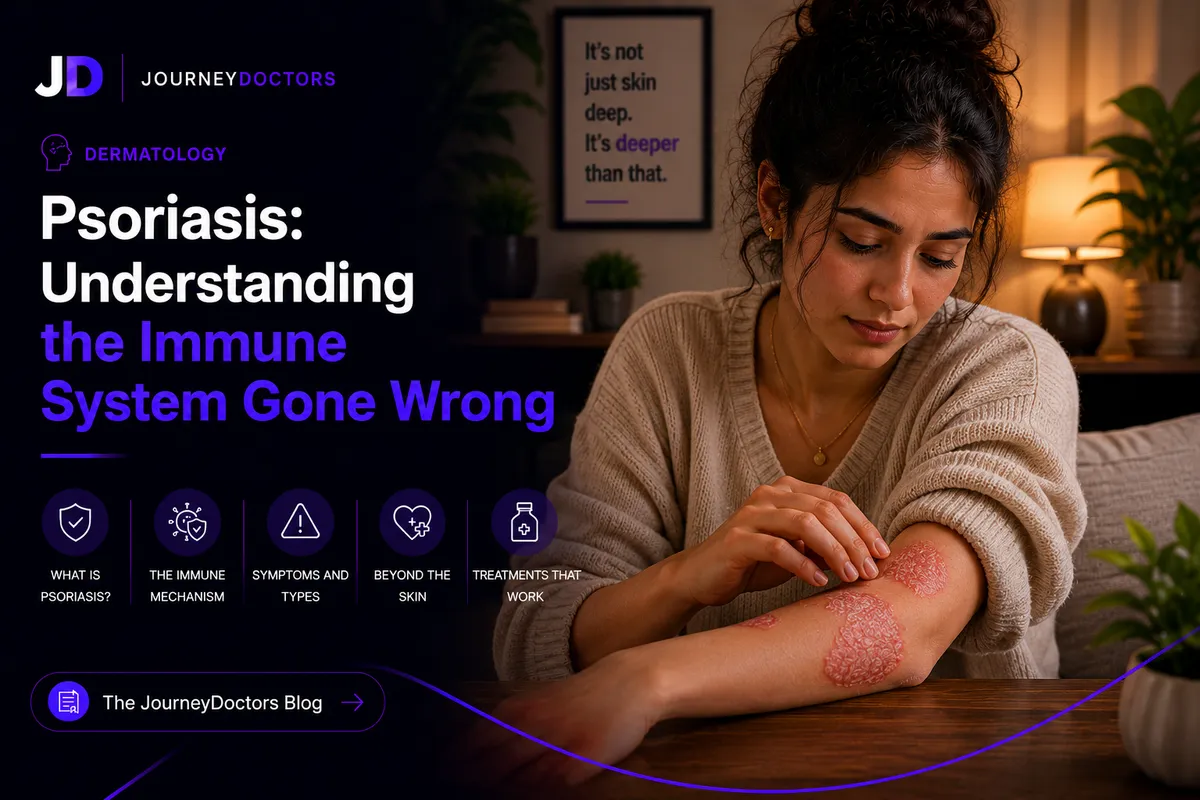
Psoriasis is one of the most common immune-mediated diseases in the world, affecting approximately 125 million people globally. It is also one of the most misunderstood, both by the general public and sometimes by clinicians who see only its visible manifestation. As a dermatologist, the most important thing I can communicate about psoriasis is that it is not a skin condition. It is an immune condition that happens to be visible on the skin. This distinction matters enormously because it changes the treatment rationale, explains the systemic health risks that accompany it, and removes the blame from the patient who has not tried hard enough with moisturizers and cortisone cream.
The visible plaques of psoriasis, the raised, red, scaly patches most commonly seen on the scalp, elbows, knees, and lower back, are the surface expression of an immune system in a state of dysregulated activation. Understanding what is happening below that surface is the starting point for understanding why psoriasis does what it does, why it flares and remits, and why severe psoriasis is associated with increased risk of cardiovascular disease, metabolic syndrome, and joint destruction.
What Causes Psoriasis
Psoriasis results from an interaction between genetic predisposition and environmental triggers. Approximately 35 gene loci are associated with psoriasis risk, with the HLA-Cw6 allele conferring the highest individual risk. Having a first-degree relative with psoriasis increases personal risk approximately three-fold. The condition is polygenic, meaning multiple genetic variants contribute rather than a single causative mutation.
The key immunological mechanism involves overactivation of T-helper 17 (Th17) cells and their signature cytokine, interleukin-17 (IL-17). When the immune system is triggered in psoriasis, dendritic cells in the skin activate T cells that produce IL-17, which drives keratinocytes (the primary skin cells) to proliferate at dramatically accelerated rates. Normal skin takes approximately 28 to 30 days to regenerate its outer layer; in psoriasis plaques, this turnover accelerates to three to four days. The cells do not have time to mature fully before reaching the surface, producing the thick, silvery scale characteristic of psoriasis. The redness beneath the scale reflects the intense inflammatory vasodilation driven by cytokine release.
Types of Psoriasis
Plaque Psoriasis
The most common form, accounting for approximately 80 to 90 percent of cases. Presents as well-demarcated raised red plaques covered with silvery-white scale, classically on the scalp, elbows, knees, and lower back. Can vary from a few isolated lesions to extensive body coverage. When scale is removed, small bleeding points appear (Auspitz sign), reflecting the dilated capillaries close to the surface of the thin psoriatic epidermis.
Guttate Psoriasis
Small, drop-shaped lesions appearing suddenly, often triggered by streptococcal throat infection. More common in children and young adults. May resolve spontaneously or progress to plaque psoriasis. Streptococcal infection is one of the most consistent triggers for guttate flares and for initial onset of psoriasis in genetically predisposed individuals.
Scalp Psoriasis
Affects approximately 50 percent of people with psoriasis and is one of the most frustrating manifestations due to difficulty accessing the skin through hair, cosmetic impact, and the significant itch and flaking that affects daily life and social functioning. Often extends beyond the hairline onto the forehead, ears, and neck.
Nail Psoriasis
Nail involvement occurs in approximately 50 percent of plaque psoriasis patients and in up to 80 to 90 percent of patients with psoriatic arthritis. Characteristic findings include pitting (small depressions), onycholysis (separation of the nail from the nail bed), oil drop discoloration, and subungual hyperkeratosis. Nail psoriasis is a strong predictor of underlying psoriatic arthritis.
Pustular Psoriasis
Characterized by non-infectious pustules (pus-filled bumps) on a background of inflamed skin. Palmoplantar pustulosis affects the palms and soles. Generalized pustular psoriasis (GPP) is rare but can be life-threatening, with fever, systemic inflammation, and widespread pustulation requiring urgent medical management.
Erythrodermic Psoriasis
A rare but severe form in which inflammation affects nearly the entire body surface. Disruption of the skin's thermoregulatory and barrier functions can produce life-threatening complications including temperature dysregulation, fluid and electrolyte imbalance, and sepsis. Requires emergency management.
Psoriatic Arthritis
JourneyDoctors
Not sure if this applies to you?
Describe your symptoms to Dr. Maya — our AI GP — and get a real clinical response in under a minute. Free to start.
Talk to Dr. MayaApproximately 30 percent of people with psoriasis develop psoriatic arthritis, an inflammatory joint condition driven by the same Th17/IL-17 immune dysregulation. It causes joint pain, swelling, morning stiffness, and progressive joint damage that can lead to permanent disability if not treated. Psoriatic arthritis can affect peripheral joints (fingers, toes, wrists, knees), the spine (causing inflammatory back pain), and tendon insertions (enthesitis). Early treatment with disease-modifying therapies prevents joint damage; delayed diagnosis allows irreversible structural changes to accumulate. Any psoriasis patient with joint pain should be evaluated for psoriatic arthritis.
Systemic Risks
Moderate to severe psoriasis is an independent risk factor for cardiovascular disease, with a risk increase of approximately 50 percent compared to unaffected individuals. The shared inflammatory mechanism, involving the same cytokines that drive arterial inflammation in atherosclerosis, explains this connection. Metabolic syndrome (the cluster of obesity, dyslipidemia, hypertension, and insulin resistance) is significantly more prevalent in psoriasis. Depression and anxiety occur at approximately three times the rate in psoriasis compared to the general population, reflecting both the psychosocial burden of a visible chronic condition and the direct neuropsychiatric effects of systemic inflammation. These risks reinforce the importance of treating psoriasis seriously as a systemic condition rather than managing surface symptoms alone.
Treatment
Topical Treatments
For mild to moderate psoriasis, topical treatments are first-line. Topical corticosteroids reduce inflammation and are effective for active plaques but are unsuitable for long-term continuous use due to risk of skin thinning (atrophy). Topical vitamin D analogues (calcipotriol) slow keratinocyte proliferation and are used in combination with steroids or alternating with them for maintenance. Topical calcineurin inhibitors (tacrolimus) are useful for sensitive areas including the face and skin folds. Coal tar preparations remain effective for scalp psoriasis. Tapinarof and roflumilast are newer topical non-steroidal options with good evidence and favorable safety profiles for longer-term use.
Phototherapy
Narrowband UVB phototherapy is one of the most effective treatments for moderate to extensive psoriasis. It suppresses the activated T cells in psoriatic skin through UV-induced apoptosis. Administered two to three times per week in a phototherapy unit, it achieves clearance or near-clearance in the majority of patients. PUVA (psoralen plus UVA) is more potent but less preferred due to higher cumulative carcinogenic risk. Phototherapy is an excellent option for patients with extensive psoriasis who cannot or prefer not to use systemic medications.
Systemic Treatments
Methotrexate, an immunosuppressant, reduces psoriasis severity by inhibiting rapidly proliferating T cells and keratinocytes. It requires regular monitoring of liver function and blood counts. Cyclosporine is highly effective for rapid control of severe psoriasis but is limited to short courses due to nephrotoxicity and hypertension risks. Acitretin (a retinoid) is useful for pustular and palmoplantar psoriasis. Apremilast, a PDE4 inhibitor taken orally, has a favorable safety profile and modest to moderate efficacy for psoriasis and psoriatic arthritis.
Biologics
Biologic therapies have transformed the treatment of moderate to severe psoriasis. These injectable or infused antibodies target specific cytokines or their receptors in the psoriatic immune cascade. IL-17 inhibitors (secukinumab, ixekizumab, bimekizumab) produce the highest rates of complete skin clearance, achieving 90 percent or greater improvement in the majority of patients. IL-23 inhibitors (risankizumab, guselkumab, tilbertinumab) have outstanding efficacy and very convenient dosing (every 12 weeks after induction). TNF inhibitors (adalimumab, etanercept) are effective for both skin and joint disease. These treatments can produce complete clearance of disease that significantly changes patients' quality of life, removing the psychological burden of extensive visible skin involvement that standard topical and phototherapy approaches cannot achieve in severe cases.
When to See a Doctor
Psoriasis affecting quality of life, visible areas, the scalp, nails, or genitals, psoriasis that has not responded to OTC treatments, and any joint pain in a person with psoriasis warrants dermatologist evaluation. JourneyDoctors dermatologists can assess your severity, recommend appropriate treatment, and discuss systemic risk management. Consultations start at $19.
Disclaimer: This article is for educational purposes only and does not constitute medical advice. Always consult a qualified healthcare professional for diagnosis and treatment of any medical condition.
Get proper care
Ready to speak with a specialist?
If anything in this article sounds familiar, the right next step is a proper evaluation. JourneyDoctors connects you with a specialist in minutes. Consultations from $19.
See a specialist nowFrequently Asked Questions
Is psoriasis contagious?
No. Psoriasis is an autoimmune condition, not an infection. It cannot be transmitted from person to person through contact, sharing clothing, towels, or any other means. The persistent social stigma around visible psoriasis is not based on any infectious risk and causes significant harm to people living with the condition.
Can psoriasis be cured?
There is no cure for psoriasis. It is a chronic relapsing-remitting condition. However, modern treatments, particularly biologics, can achieve complete or near-complete skin clearance that is sustained for years in many patients. For people with mild disease, targeted topical management with occasional phototherapy can control the condition with minimal treatment burden. The treatment landscape has improved dramatically in the past 15 years.
What triggers psoriasis flares?
Common triggers include streptococcal throat infection, physical trauma to the skin (the Koebner phenomenon, where psoriasis develops at sites of injury), psychological stress, certain medications (lithium, beta-blockers, antimalarials, NSAIDs, and some others), alcohol consumption, and smoking. Identifying and avoiding personal triggers reduces flare frequency. Stress management is particularly important given the clear association between psychological stress and immune activation in psoriasis.
Does diet affect psoriasis?
Dietary intervention has modest evidence for impact on psoriasis severity. The Mediterranean diet, which is anti-inflammatory in pattern, is associated with lower psoriasis severity in observational studies. Weight loss in overweight patients with psoriasis reduces disease severity and improves response to treatment. Alcohol worsens psoriasis through multiple mechanisms and its reduction is clinically meaningful. The evidence does not support rigorous elimination diets for psoriasis in the absence of identified specific sensitivities.
Is psoriasis related to gut health?
Emerging research has identified differences in the gut microbiome between people with psoriasis and healthy controls, and the gut-skin-immune axis is an active area of research. People with psoriasis have higher rates of inflammatory bowel disease (Crohn's disease and ulcerative colitis) than the general population, consistent with shared immunological pathways. Whether microbiome modification can meaningfully affect psoriasis remains investigational; probiotic evidence for psoriasis specifically is insufficient to recommend as treatment.
Written by
Dr. Priya Sharma
Dermatology