

Rosacea: What Triggers It, What Treats It, and What Makes It Worse
Rosacea affects more than 400 million people worldwide. Most go years without a diagnosis because they think flushing and redness are just how their skin works.
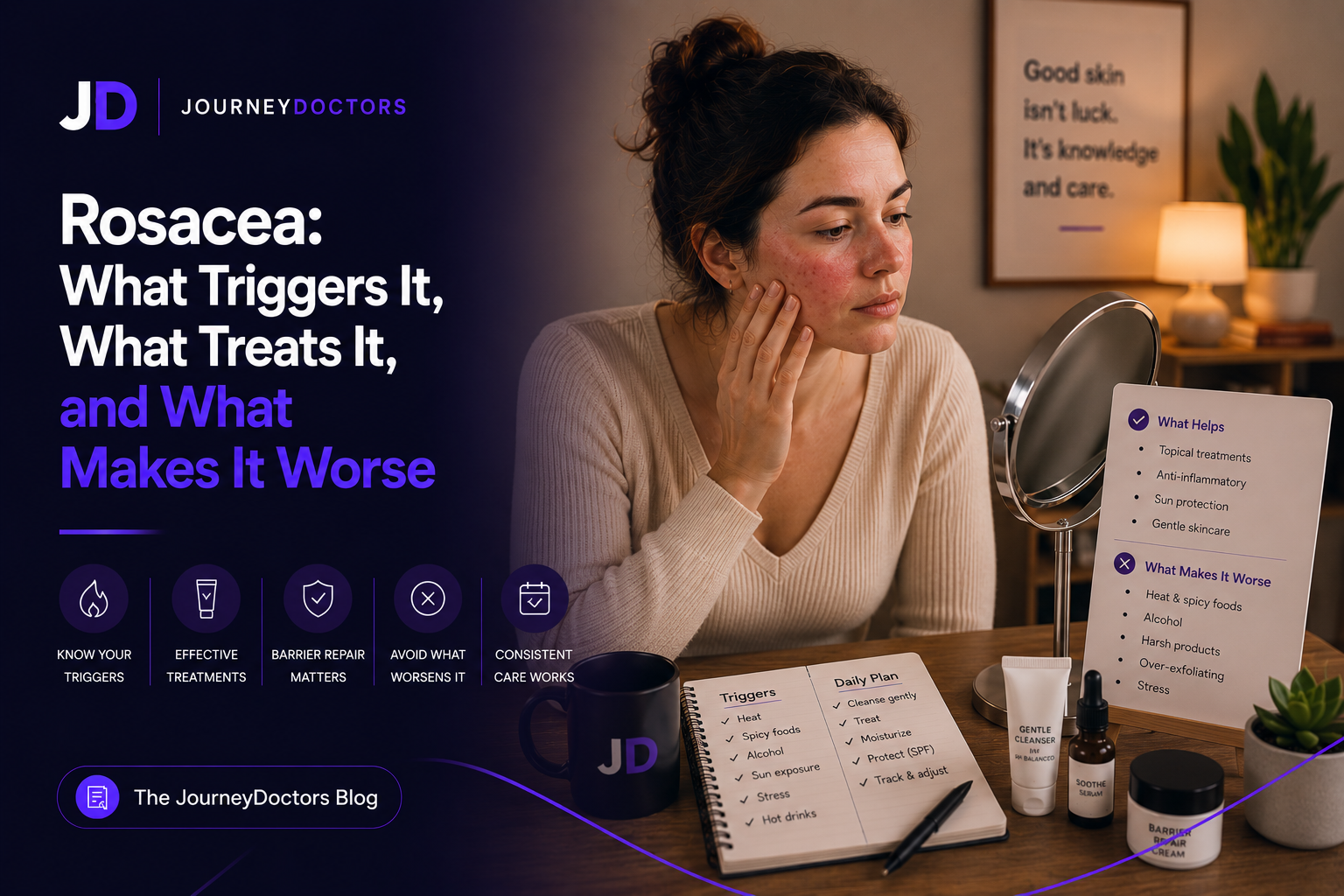
Rosacea is one of the most underdiagnosed skin conditions I see in my practice. Patients come in describing years of facial redness, flushing after a glass of wine, broken capillaries on the nose and cheeks, and skin that burns when they apply almost anything to it. Many have been told this is just sensitive skin or adult acne and have spent considerable time and money on products that made things worse. Rosacea is a distinct chronic inflammatory condition of the skin and blood vessels, and treating it effectively requires understanding what it actually is rather than what it resembles.
Approximately one in ten adults has rosacea, making it one of the more common dermatological conditions in people over 30. It is more common in women but tends to be more severe in men, partly because men seek diagnosis later. It disproportionately affects fair-skinned people of Northern European descent, though it occurs across all skin tones and is often missed in darker skin because the redness is harder to see.
What Rosacea Is and Is Not
Rosacea is not acne, though the two can coexist and the papulopustular subtype of rosacea produces pimple-like lesions that are easily confused with acne. Treating rosacea like acne, particularly with harsh exfoliants, high-strength benzoyl peroxide, or alcohol-based products, typically makes it significantly worse.
Rosacea is also not a hygiene problem or the result of poor skincare habits. It is a condition driven by an abnormal inflammatory response in genetically predisposed individuals, involving dysfunction in the innate immune system, abnormal blood vessel reactivity, and in some forms, an overpopulation of a tiny skin mite called Demodex folliculorum. Understanding the biology matters because it explains why the triggers and treatments are specific to this condition rather than generalizable advice about skincare.
The Four Subtypes
Erythematotelangiectatic Rosacea (ETR)
This is the most common subtype and is characterized by persistent central facial redness, flushing, visible small blood vessels (telangiectasias), and skin that burns, stings, or becomes red easily in response to stimuli. People with ETR often describe their face feeling hot after eating, drinking alcohol, exercising, or being in a warm room. The skin is typically sensitive and reactive to many skincare products.
Papulopustular Rosacea
This subtype features the redness and flushing of ETR combined with acne-like papules and pustules in the central face. Unlike acne, there are usually no comedones (blackheads or whiteheads), and the lesions tend to come and go rather than persist as stable cysts. This is the subtype most frequently misdiagnosed as adult acne.
Phymatous Rosacea
This subtype involves skin thickening and irregular surface texture, most recognizably on the nose (rhinophyma), where the tissue can become significantly enlarged and bulbous. It is far more common in men. Early treatment of rosacea reduces the risk of developing phymatous changes, though established rhinophyma typically requires surgical or laser treatment.
Ocular Rosacea
Approximately 60 percent of rosacea patients have ocular involvement, including eye redness, dryness, a gritty or burning sensation, eyelid inflammation (blepharitis), and in severe cases, corneal damage. Ocular rosacea often goes unrecognized because patients do not connect their eye symptoms to their skin condition. If you have rosacea and chronic dry or irritated eyes, this connection is worth discussing with a dermatologist or ophthalmologist.
Common Triggers
JourneyDoctors
Not sure if this applies to you?
Describe your symptoms to Dr. Maya — our AI GP — and get a real clinical response in under a minute. Free to start.
Talk to Dr. MayaRosacea is a condition of triggers. The underlying inflammation is chronic, but flares are driven by specific stimuli that cause blood vessel dilation and inflammatory activation. Identifying and avoiding your personal triggers is one of the most effective management strategies available.
Temperature and Sun
Heat is the most universal rosacea trigger. Sun exposure, hot weather, saunas, hot baths, and even hot drinks can provoke flushing and flares. UV exposure is particularly problematic because it both triggers acute flares and causes long-term progression of vascular changes. Daily broad-spectrum SPF 30 or higher is not optional in rosacea management. It is one of the highest-impact interventions available and the one that prevents the most damage over time. Mineral sunscreens containing zinc oxide or titanium dioxide are better tolerated than chemical sunscreens in most rosacea patients.
Alcohol
Red wine is the most consistent dietary trigger across rosacea patients, followed by other alcoholic beverages. The mechanism involves direct blood vessel dilation as well as the vasodilatory effects of histamine in fermented drinks. Not all rosacea patients are triggered by alcohol, but for those who are, even a small amount can produce significant flushing that lasts for hours.
Spicy Foods
Capsaicin in spicy foods activates TRPV1 receptors in skin, causing vasodilation and flushing. Hot sauce, chili peppers, and heavily spiced foods are common triggers. This is a highly individual response: some people with rosacea tolerate spicy food well while others find it reliably triggers flares.
Exercise
Physical exertion raises core body temperature and increases blood flow to the skin, both of which trigger flushing in rosacea. This does not mean exercise should be avoided; it means adapting how you exercise. Cooler environments, lower intensity steady-state cardio rather than high-intensity intervals, and cooling measures during exercise (cold water, fans, cool towels on the face) all help reduce exercise-induced flares.
Skincare Products
Many common skincare ingredients trigger rosacea flares, including alcohol, witch hazel, menthol, camphor, eucalyptus oil, fragrances, high concentrations of niacinamide, and certain preservatives. Physical exfoliants and harsh cleansers disrupt the skin barrier and worsen sensitivity. The general principle for rosacea skincare is: fewer ingredients, lower concentrations, fragrance-free, and pH-balanced.
Emotional Stress
The mechanisms are similar to those underlying stress-triggered acne flares: cortisol and the sympathetic nervous system influence inflammatory pathways and vascular tone. Patients often report that periods of high stress reliably worsen their rosacea, which can itself become a source of anxiety, creating a cycle. Stress management is not the whole answer to rosacea but it is a real contributor.
Treatments That Work
Topical Azelaic Acid
Azelaic acid is anti-inflammatory, reduces erythema, and targets the papulopustular component of rosacea. It is available by prescription at 15 to 20 percent concentration and over the counter at lower concentrations. It is generally well tolerated, effective in darker skin tones without risk of post-inflammatory hyperpigmentation, and compatible with sensitive skin. I consider it a first-line topical option for mild to moderate rosacea.
Topical Metronidazole
Metronidazole gel or cream is one of the most studied topical treatments for papulopustular rosacea. It is anti-inflammatory and antimicrobial and has a good safety profile for long-term use. Results typically become visible at six to eight weeks with consistent application.
Topical Ivermectin
Ivermectin 1% cream targets the Demodex mites that are elevated in rosacea patients and contribute to inflammation. In head-to-head trials, ivermectin has outperformed metronidazole for papulopustular rosacea. It is now considered a first-line prescription option for this subtype.
Brimonidine and Oxymetazoline
These are topical alpha-adrenergic agonists that constrict blood vessels in the skin, producing rapid but temporary reduction in facial redness. They are effective for the erythema of rosacea but do not treat the underlying inflammation. Rebound redness can occur when the effect wears off. They are most useful for specific events or situations rather than daily maintenance.
Oral Antibiotics
Doxycycline at the standard antibiotic dose (100 mg twice daily) treats rosacea through its anti-inflammatory properties rather than primarily its antimicrobial effects. A sub-antimicrobial dose formulation (40 mg modified-release) is FDA-approved specifically for rosacea and produces anti-inflammatory effects without the systemic antibiotic activity, reducing the risk of microbiome disruption and antibiotic resistance. Oral antibiotics are effective for moderate to severe papulopustular rosacea and are typically used for three to four months alongside topical maintenance treatment.
Laser and Light-Based Treatments
Pulsed dye laser (PDL) and intense pulsed light (IPL) are effective for treating visible blood vessels and diffuse redness in erythematotelangiectatic rosacea. These are not topical treatments; they require a clinical setting and typically require multiple sessions. Results can be significant and long-lasting, reducing background redness and flushing. They represent the primary structural treatment for ETR-pattern vascular changes that do not respond adequately to topicals alone.
Skincare for Rosacea
Building a rosacea-appropriate skincare routine focuses on barrier repair, minimal irritation, and sun protection. A simple routine with three products often outperforms a complex routine with many actives. A gentle non-foaming cleanser, a bland fragrance-free moisturizer to support barrier function, and a mineral SPF are the foundation. Niacinamide at 2 to 5 percent can be added for anti-inflammatory benefit once the skin is stable. Retinoids can help some rosacea patients with skin texture but should be introduced very slowly and at low concentrations under medical guidance.
The most common mistake I see in rosacea management is attempting to treat it aggressively with products designed for acne. Acids, exfoliating brushes, high-strength vitamin C serums, and alcohol-based toners reliably worsen rosacea and damage the barrier that is already compromised.
When to See a Doctor
If you have persistent central facial redness, frequent flushing, visible broken blood vessels, or pimple-like lesions that do not respond to standard acne treatment, rosacea is a likely diagnosis. A dermatologist can confirm the diagnosis, identify your subtype, and recommend treatment matched to what is actually driving your symptoms. JourneyDoctors dermatologists can evaluate your skin and discuss prescription options in a consultation starting at $19.
Disclaimer: This article is for educational purposes only and does not constitute medical advice. Always consult a qualified healthcare professional for diagnosis and treatment of any medical condition.
Get proper care
Ready to speak with a specialist?
If anything in this article sounds familiar, the right next step is a proper evaluation. JourneyDoctors connects you with a specialist in minutes. Consultations from $19.
See a specialist nowFrequently Asked Questions
Is rosacea permanent?
Rosacea is a chronic condition, meaning it does not have a cure, but it is very manageable. With appropriate treatment and trigger avoidance, the majority of patients achieve good control with minimal flares. Without treatment, rosacea tends to progress over time, particularly the vascular and phymatous components. Early diagnosis and management produce better long-term outcomes.
Can rosacea affect the eyes?
Yes. Ocular rosacea affects an estimated 60 percent of rosacea patients to some degree and is frequently overlooked. Symptoms include redness, dryness, a gritty sensation, and eyelid inflammation. If you have rosacea and chronic eye irritation, discuss ocular rosacea with your dermatologist or ophthalmologist. Treatment typically includes warm compresses, lid hygiene, and in some cases oral doxycycline.
Does diet affect rosacea?
Yes, for many patients. Red wine and other alcohol, spicy foods, and hot beverages are the most common dietary triggers. There is also emerging evidence that a gut-skin connection may be relevant: people with rosacea have higher rates of small intestinal bacterial overgrowth and other gut dysbioses. A registered dietitian familiar with inflammatory skin conditions can help identify dietary triggers specific to your case.
Is rosacea related to acne?
They are distinct conditions with different causes, though they can coexist. The papulopustular subtype of rosacea produces acne-like lesions but is driven by a different mechanism and requires different treatment. Standard acne treatments, particularly those that are drying or exfoliating, often worsen rosacea. A correct diagnosis is important before treatment begins.
What sunscreen is best for rosacea?
Mineral sunscreens using zinc oxide or titanium dioxide are generally better tolerated than chemical sunscreens, which can cause stinging or flushing in sensitive rosacea skin. Look for a fragrance-free formula with SPF 30 or higher. Tinted mineral sunscreens have the added benefit of providing some coverage for redness while protecting against UV exposure.
Written by
Dr. Priya Sharma
Dermatology