

Thyroid Problems: Hypothyroidism, Hyperthyroidism, and What Your TSH Means
The thyroid controls your metabolism, energy, mood, weight, and heart rate. When it malfunctions in either direction, the effects touch nearly every system in the body.
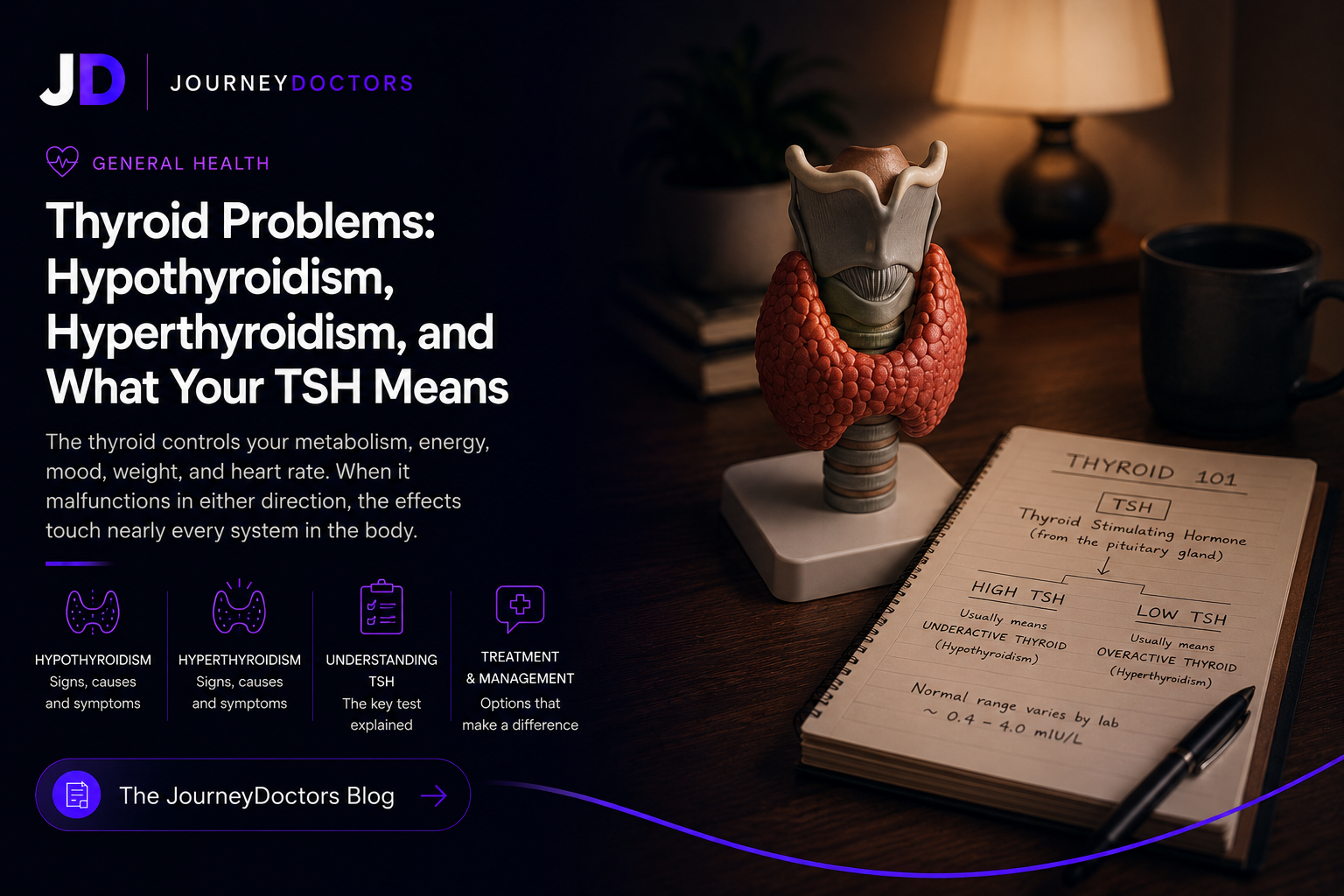
The thyroid gland, a small butterfly-shaped structure at the base of the neck, produces hormones that regulate the metabolic rate of virtually every cell in the body. When it produces too little hormone, metabolism slows; when it produces too much, metabolism accelerates. Both conditions can cause significant symptoms that are easily attributed to other causes, including aging, depression, anxiety, or simply being tired. Thyroid disorders are among the most common endocrine conditions globally, affecting an estimated 750 million people, the majority of whom are undiagnosed. As an internist, checking thyroid function is one of the first things I do when a patient presents with unexplained fatigue, weight changes, mood disturbance, or symptoms that do not fit neatly into another diagnosis.
How the Thyroid Works
The thyroid is regulated by a feedback loop involving the hypothalamus and pituitary gland. The pituitary produces thyroid-stimulating hormone (TSH), which signals the thyroid to produce thyroxine (T4) and triiodothyronine (T3). T4 is the primary hormone produced by the thyroid; most T3, which is the more biologically active hormone, is produced by conversion of T4 in peripheral tissues. TSH is the most sensitive indicator of thyroid function because it rises before thyroid hormone levels fall (in hypothyroidism) and falls before they rise (in hyperthyroidism). This is why TSH is typically the first and sometimes the only thyroid test needed in routine screening.
The normal TSH range in most laboratories is approximately 0.5 to 4.5 mIU/L, though this range is debated. Some authorities argue that a reference range derived from a population including undetected subclinical thyroid disease overestimates the normal upper limit, and that the optimal range may be narrower. Clinical interpretation of TSH must account for age (TSH naturally rises with age, so a TSH of 6 in an 80-year-old is less clinically significant than in a 30-year-old) and pregnancy (TSH targets are lower in pregnancy because adequate thyroid hormone is critical for fetal neurological development).
Hypothyroidism: Underactive Thyroid
Hypothyroidism occurs when the thyroid gland does not produce enough hormone to meet the body's needs. Primary hypothyroidism, where the problem is the thyroid gland itself, is far more common than secondary (pituitary) causes. The most common cause globally is iodine deficiency. In iodine-sufficient countries, the most common cause is Hashimoto's thyroiditis, an autoimmune condition in which the immune system attacks and gradually destroys thyroid tissue. Hashimoto's is about seven times more common in women than in men and has a strong hereditary component.
Hypothyroidism affects approximately 5 percent of the population, with significantly higher prevalence in women and older adults. Subclinical hypothyroidism, where TSH is elevated but free T4 is still within the normal range, is more common, affecting 3 to 8 percent of adults.
Symptoms
The symptoms of hypothyroidism reflect the general slowing of metabolism. Fatigue that does not improve with rest is the most common presenting complaint. Weight gain that is unexplained by changes in diet or activity. Feeling cold when others are comfortable. Dry skin and hair. Constipation. Bradycardia (slow heart rate). Depression or low mood. Brain fog, poor concentration, and memory problems. Swelling in the lower legs (myxedema). Hoarse voice. In women, heavy or irregular menstrual periods. Elevated cholesterol, as thyroid hormone is required for normal LDL metabolism.
The challenge is that each of these symptoms individually is non-specific and common. It is the constellation of multiple symptoms with the appropriate laboratory finding that makes the diagnosis. Many patients with hypothyroidism have seen multiple providers and been treated for depression, fatigue, or other conditions before the thyroid problem was identified.
Treatment
Hypothyroidism is treated with levothyroxine (L-T4), a synthetic form of T4. It is typically taken as a single daily tablet on an empty stomach (30 to 60 minutes before food or other medications) because absorption is significantly impaired by food, calcium, iron supplements, and several other medications. Levothyroxine is one of the most prescribed medications globally and has a very favorable safety profile when dosed appropriately. Dosing is adjusted based on TSH monitoring, typically every six to eight weeks after initiation or dose change until stable, then annually.
Most patients with hypothyroidism feel entirely well on appropriate levothyroxine replacement. A minority experience persistent symptoms despite optimized TSH. The debate around adding T3 (liothyronine) supplementation to levothyroxine in these patients continues in the literature; some patients do benefit, though this is not first-line and should be managed by a specialist.
Hyperthyroidism: Overactive Thyroid
JourneyDoctors
Not sure if this applies to you?
Describe your symptoms to Dr. Maya — our AI GP — and get a real clinical response in under a minute. Free to start.
Talk to Dr. MayaHyperthyroidism occurs when the thyroid produces excess hormone. The most common causes are Graves' disease (an autoimmune condition in which stimulating antibodies bind TSH receptors and drive thyroid hormone production), toxic nodular goiter (where one or more thyroid nodules produce hormone autonomously), and thyroiditis (transient hyperthyroidism from inflammatory release of stored thyroid hormone).
Hyperthyroidism is less common than hypothyroidism but carries more acute clinical significance because of its cardiovascular effects.
Symptoms
The symptoms of hyperthyroidism reflect accelerated metabolism. Unexplained weight loss despite good or increased appetite. Palpitations, rapid or irregular heartbeat. Heat intolerance and excessive sweating. Tremor in the hands. Anxiety, irritability, and difficulty sleeping. Frequent bowel movements. Fatigue from the sustained metabolic demand. In women, lighter or absent periods. In Graves' disease specifically, eye changes (Graves' ophthalmopathy) including proptosis (bulging eyes), lid retraction, and eye irritation occur in approximately 25 percent of patients and can be the presenting complaint before thyroid abnormalities are identified.
Thyroid storm is a rare but life-threatening complication of severe hyperthyroidism, typically triggered by physiological stress in an incompletely treated patient. It presents with extreme tachycardia, hyperthermia, altered consciousness, and cardiovascular instability and requires emergency management.
Treatment
Three treatment options exist for hyperthyroidism: antithyroid medications, radioactive iodine ablation, and surgery. Methimazole (or propylthiouracil in pregnancy) blocks thyroid hormone synthesis and is the standard initial medical treatment. Beta-blockers provide symptomatic relief of palpitations and tremor while awaiting hormone normalization. Radioactive iodine ablation destroys thyroid tissue, eventually producing hypothyroidism in the majority of patients who require lifelong levothyroxine afterward. Thyroidectomy (surgical removal of the thyroid) produces definitive treatment and is preferred in Graves' ophthalmopathy, large goiters, or when rapid control is needed. The choice between these approaches depends on the cause, severity, patient age, pregnancy status, and presence of eye disease.
Thyroid Nodules
Thyroid nodules are extremely common, detected by ultrasound in approximately 50 to 60 percent of adults. The vast majority are benign. The primary clinical concern with a thyroid nodule is ruling out thyroid cancer, which occurs in approximately 5 to 10 percent of thyroid nodules. Ultrasound characteristics guide risk stratification; fine needle aspiration biopsy is performed for nodules with suspicious features or above a size threshold depending on their characteristics. The most common thyroid cancers (papillary and follicular thyroid cancer) have excellent prognoses when caught at a typical stage.
Subclinical Thyroid Disease
Subclinical hypothyroidism (elevated TSH, normal T4) and subclinical hyperthyroidism (low TSH, normal T3 and T4) are common incidental findings. Whether to treat subclinical thyroid disease depends on the degree of TSH abnormality, patient age, symptoms, pregnancy, and cardiovascular risk. Subclinical hypothyroidism with TSH between 4.5 and 10 is typically monitored rather than treated in the absence of symptoms in older adults; treatment is generally recommended in younger symptomatic patients, pregnant women, and those with very elevated TSH. Subclinical hyperthyroidism with very low or undetectable TSH carries cardiovascular risk (particularly atrial fibrillation) and bone loss risk in postmenopausal women, making treatment more often indicated.
When to See a Doctor
If you have any of the symptoms described in this article and have not had thyroid function checked, this is a simple blood test worth requesting. TSH is included in most routine workups and can be ordered as a standalone test. Abnormal results require clinical context for interpretation. JourneyDoctors internists and GPs can order and interpret thyroid tests and guide appropriate management. Consultations start at $19.
Disclaimer: This article is for educational purposes only and does not constitute medical advice. Always consult a qualified healthcare professional for diagnosis and treatment of any medical condition.
Get proper care
Ready to speak with a specialist?
If anything in this article sounds familiar, the right next step is a proper evaluation. JourneyDoctors connects you with a specialist in minutes. Consultations from $19.
See a specialist nowFrequently Asked Questions
What is the difference between T3 and T4?
T4 (thyroxine) is the primary hormone produced by the thyroid gland. It is relatively inactive and serves as a prohormone. T3 (triiodothyronine) is the biologically active form, produced primarily by conversion of T4 in peripheral tissues (liver, kidneys, muscles). T3 is more potent but has a shorter half-life. Standard thyroid replacement uses synthetic T4 (levothyroxine), relying on normal peripheral conversion to produce adequate T3.
Can thyroid problems cause weight gain?
Yes. Hypothyroidism slows metabolism and reduces energy expenditure, contributing to weight gain. However, the magnitude of weight gain directly attributable to hypothyroidism is typically modest (2 to 5 kilograms), not the dramatic weight changes that people sometimes attribute to thyroid dysfunction. Successful levothyroxine treatment restores metabolic rate but does not reliably cause significant weight loss in people who have gained substantial weight.
Is Hashimoto's disease serious?
Hashimoto's thyroiditis, the most common cause of hypothyroidism in iodine-sufficient countries, is a chronic autoimmune condition. It is manageable and not life-threatening with appropriate monitoring and treatment when hypothyroidism develops. Some patients with Hashimoto's have normal TSH for years before eventually developing hypothyroidism. Having Hashimoto's does increase the risk of other autoimmune conditions including type 1 diabetes, celiac disease, and rheumatoid arthritis, which is worth discussing in terms of appropriate screening.
Can diet affect the thyroid?
Iodine is essential for thyroid hormone synthesis; both iodine deficiency and excess can disrupt thyroid function. Iodized salt has eliminated deficiency as a common cause in most developed countries, though very low sodium diets or avoidance of iodized salt can create mild deficiency. Large amounts of raw cruciferous vegetables contain goitrogens that theoretically inhibit thyroid hormone synthesis, but clinical significance at typical dietary intake is negligible. Selenium plays a role in T4 to T3 conversion, and selenium deficiency (uncommon in most developed countries) can impair thyroid function.
Should I get my thyroid checked even if I feel fine?
Thyroid screening is recommended for specific high-risk groups: women over 60, anyone with a personal or family history of thyroid disease, people with autoimmune conditions, those who have had head and neck radiation, and people on medications that affect thyroid function (lithium, amiodarone). Universal screening of the general population is not currently recommended by most guidelines, though it is reasonable to check in anyone with symptoms consistent with thyroid dysfunction, regardless of age or risk factors.
Written by
Dr. James Okafor
Internal Medicine